
PostNL Is Betting Its Last Mile on 7,500 Parcel Lockers, Not More Trucks
PostNL Is Betting Its Last Mile on 7,500 Parcel Lockers, Not More Trucks
PostNL's half year 2026 results landed with a familiar pattern on the surface. Revenue held almost flat at roughly 1.59 billion euros while parcel volume fell 6.4 percent, split between a 4.2 percent decline in domestic parcels and a much steeper drop of nearly 15 percent in international volume. The company pointed to fewer packages arriving from Asian marketplaces such as Temu and AliExpress, a direct consequence of the new EU import duty on low value shipments that took effect on 1 July 2026. Average revenue per parcel rose about 5 percent, and PostNL reaffirmed its full year guidance despite carrying fewer parcels than a year earlier.
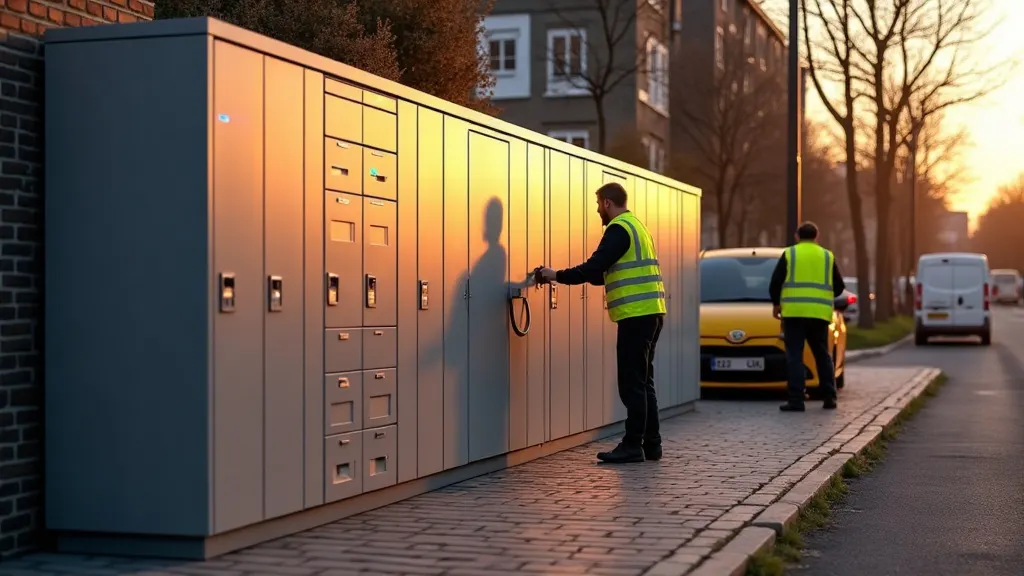
That much fits the volume to value story that carriers across Europe have been telling for the past year. What makes this set of results different, and worth a second look from anyone running e-commerce logistics, is the infrastructure commitment sitting underneath the headline numbers. PostNL confirmed plans to grow its Dutch parcel locker network roughly fourfold, from around 1,800 automated locations today to approximately 7,500 by 2031. That is not a marketing flourish attached to a quarterly earnings call. It is a multi year capital allocation decision, and it tells you where PostNL believes the economics of last mile delivery are heading.
For a merchant, a 3PL, or a fulfillment team planning shipping strategy into the second half of 2026, that decision deserves more attention than it is currently getting. A carrier reallocating capital away from home delivery capacity and toward a fixed network of pickup points is not a neutral operational choice. It changes what "reliable delivery" means, it changes where your negotiating leverage sits, and it introduces a dependency that most shipping setups are not yet built to handle.
What the H1 2026 Numbers Actually Say
Read together, PostNL's half year 2026 figures describe a carrier deliberately shrinking the least profitable part of its parcel book. Domestic volume softened only modestly, which suggests core Dutch e-commerce shipping held up reasonably well. The real damage came from cross-border, low value shipments, exactly the segment hit hardest by the European Commission's new per item import charge on non-EU consignments. We covered what that charge means operationally in our earlier analysis of the EU's per item duty, and these H1 results are the first hard evidence of how quickly it reshaped actual parcel flows once it took effect.
We already wrote about the pricing side of PostNL's strategy when Q1 2026 numbers showed a volume to value shift built on raising average price per parcel. The H1 results confirm that trend held through the first half of the year, but they also reveal the second half of the strategy that was harder to see in Q1 alone. Raising prices captures more margin from the parcels a carrier already handles. Rebuilding the delivery network around lockers changes the cost base of handling those parcels in the first place. Together, the two moves describe a carrier optimizing both sides of its unit economics at once, not simply passing costs upward.
Why Lockers, and Why Now
The economics behind this bet are straightforward once you look at them from the courier's side of the last mile rather than the shopper's side. A driver delivering to individual doorsteps makes one stop per parcel, absorbs the cost of failed delivery attempts when nobody is home, and spends unproductive time navigating buildings, buzzers, and parking. A driver dropping fifty parcels at a single locker wall makes one stop for fifty deliveries, with a near zero failed delivery rate because the locker is always "home."
That difference in cost per drop is the entire argument for locker investment, and it becomes more attractive every year that driver wages and urban delivery congestion both rise. It is also why locker investment survives a volume downturn that would normally freeze other capital spending. Fewer parcels overall makes the fixed cost of a locker network relatively more valuable, not less, because each locker touchpoint amortizes across more of PostNL's shrinking but higher margin parcel base.
There is a customer retention angle too, one that rarely gets discussed alongside the cost argument. Once a shopper adopts a habit of collecting parcels from a specific locker on their commute or near their home, that habit is sticky in a way a home delivery slot never is. PostNL is not only building infrastructure, it is building a distribution channel that shoppers actively opt into and keep using, which is a stronger competitive moat than price alone. We wrote about the broader European race toward pickup point density in our out-of-home delivery guide, and the Dutch carriers' own shared parcel point covenant shows the industry already recognizes that locker coverage, not van capacity, is becoming the contested ground of last mile competition.
The Dependency Risk Hiding Inside a Good Infrastructure Story
Here is where the story stops being simply good news for logistics efficiency and starts being something e-commerce brands need to actively manage. As PostNL, and the carriers responding to it, pour capital into proprietary locker networks rather than shared, carrier agnostic infrastructure, merchants who integrate deeply with a single carrier's locker system inherit that carrier's coverage map as their own delivery promise. If your checkout only offers "pick up at locker" through one carrier's network, your actual delivery convenience for any given customer is entirely dependent on how dense that specific carrier happens to be in that specific postcode, which varies enormously between a dense city center and a rural village even within a small country like the Netherlands.
This is coverage arbitrage, and it works against merchants more often than it works for them. A shopper five minutes from a PostNL locker and forty minutes from a DHL locker sees a very different delivery experience than a shopper in the reverse situation, even though both are theoretically served by "locker pickup." A checkout experience wired to a single network cannot see that difference and cannot route around it. It simply shows the option or hides it, based on whichever carrier the merchant happened to integrate with first.
There is a second, less visible risk. A locker network, unlike a fleet of delivery vans, has a hard physical capacity ceiling at each location. During peak weeks, a popular locker bank fills up and stops accepting new drops long before a courier van would simply run a slightly later route. Shippers who lean on a single carrier's locker network for a meaningful share of Q4 volume are exposed to a failure mode that barely existed when most parcels went to doorsteps, because doorstep delivery degrades gracefully under pressure while locker capacity fails abruptly once it is full.
The Home Delivery Squeeze
One consequence rarely gets stated directly by carriers themselves: capital that goes into locker networks is capital that does not go into expanding home delivery capacity. If PostNL's H1 numbers are any guide, the carrier is comfortable letting home delivery capacity stay roughly flat, or even contract in relative terms, while it builds out pickup infrastructure instead. For merchants whose customer base still strongly prefers doorstep delivery, whether for large items, older customers, or simple convenience, that is worth watching closely over the next few peak seasons, since service levels and pricing on pure home delivery may quietly become less favorable exactly as locker options improve.
Three Things to Do Before H2 2026 Peak
A few practical steps separate shippers who benefit from this shift from shippers who get exposed by it.
First, map actual locker coverage by postcode across at least two carrier networks before finalizing which pickup options appear at checkout for Q4. A national locker count of 7,500 is meaningless for a specific customer if the nearest one to them belongs to a different carrier than the one your checkout integrates with.
Second, track the real cost per drop difference between locker and doorstep delivery on your highest volume shipping lanes, and let that data, not a fixed default, decide which option your shipping rules present first at checkout.
Third, build failover capacity for locker delivery the same way most serious shippers already build failover for standard parcel capacity. A single carrier's locker network can hit its ceiling during peak weeks just as easily as its van fleet can, and a shipping setup with only one locker network wired in has no fallback when that happens.
Where Zineps Fits
This is precisely the kind of shift that is easy to miss when your shipping setup is wired to a single carrier's API and hard to miss once you have real coverage and performance data sitting in one place. As the Operating System for Shipments, Zineps connects e-commerce businesses to a growing network of European carriers, including their locker and pickup point infrastructure, through a single integration. Shipping rules can route each order to the locker network, or the home delivery option, that actually serves that specific customer best, based on real coverage and real cost per drop rather than whichever carrier relationship happened to be set up first.
PostNL's bet on 7,500 lockers is a rational, well capitalized move by one carrier optimizing its own network. It only becomes a problem for your business if your delivery strategy is built around a single carrier's version of what "good coverage" looks like. Businesses that keep carrier choice dynamic, informed by live data rather than a checkout default set years ago, are the ones positioned to benefit from every carrier's infrastructure investment rather than being boxed in by just one.
Ready to see how unified, carrier agnostic locker and delivery data could change your checkout options before Q4 peak arrives? Talk to the Zineps team about connecting your fulfillment operation to a Logistics OS built for exactly this kind of shift.