
Logistics Intelligence Software voor E-Commerce: Hoe Je Stopt met Carriers in het Donker Beheren
Ergens tussen het plaatsen van een bestelling bij een carrier en het bezorgen van dat pakket bij een klant verandert er iets. De retailer die het heeft verzonden, heeft vaak geen idee wat dat precies is totdat de klant klaagt.
Dit is de visibiliteitkloof die de operationele realiteit bepaalt voor de meeste Europese e-commerce bedrijven vandaag. En hoewel er genoeg tools zijn die beweren dit op te lossen, is de categorie logistics intelligence software stilletjes een van de meest bepalende en tegelijk meest verwarrende categorieën geworden in de gehele logistieke technologiestack.
Dit artikel legt uit wat logistics intelligence software daadwerkelijk doet, wat de beste platforms onderscheidt van de rest, en waarom het antwoord voor de meeste e-commerce operaties minder gaat over het vinden van de perfecte tool en meer over het bouwen van de juiste fundering.
Wat Logistics Intelligence Eigenlijk Betekent in 2026
Logistics intelligence is niet hetzelfde als zendingtracking. Het onderscheid is belangrijker dan de meeste mensen beseffen.
Tracking is reactief: je krijgt een statusupdate wanneer er iets gebeurt. Intelligence is proactief: je krijgt een signaal voordat er iets misgaat, met voldoende context om te handelen.
Echte logistics intelligence software brengt carrierprestatiedata, bezorgsuccespercentages, doorlooptijdafwijkingen, factuurdata, uitzonderingspatronen en klantgerichte impact samen in één operationele laag waarop teams beslissingen kunnen baseren. Het verandert ruwe carrier-eventdata in zakelijk inzicht.
De beste platforms in 2026 doen minimaal drie dingen tegelijkertijd:
- Ze monitoren: het volgen van events bij elke carrier in real time
- Ze analyseren: het vergelijken van carrierprestaties met benchmarks, SLA's en historische gemiddelden
- Ze handelen: het activeren van meldingen, het automatiseren van reacties en het voeden van carrier-selectielogica
Van Visibiliteit naar Interventie
De evolutie van basis-tracking naar logistics intelligence weerspiegelt wat er in de jaren 2010 met CRM-software gebeurde. Aanvankelijk sloegen CRM's alleen contactgegevens op. Daarna begonnen ze signalen te tonen, risico's te markeren en verkoopteams richting de juiste volgende actie te sturen. Logistics intelligence platforms doen hetzelfde voor carrierbeheer.
In 2026 is de minimumverwachting van kopers tracking op ritniveau met een verversingstijd van 30 tot 60 seconden. Maar de platforms die echte concurrentievoordelen bieden, gaan veel verder. Ze correleren patronen van bezorgmislukkingen met specifieke carrierroutes, markeren factuurafwijkingen automatisch en signaleren prestatiedaling bij carriers voordat dit invloed heeft op je klanttevredenheidsscores.
Waarom de Meeste E-Commerce Merken een Carrierdataprobleem Hebben
De Europese carrierproblemratio steeg van 4,68% in Q3 2024 naar 7,74% in Q4 2024, aldus recent brancheonderzoek naar Europese logistiekprestaties. Dat betekent dat ongeveer 1 op de 13 Europese pakketten in Q4 2024 een probleem ondervond tijdens het transport.
Ondertussen zegt 61% van de shoppers dat ze naar een andere retailer zouden overstappen na één mislukte bezorging. De berekening is hard: als je 10.000 bestellingen per maand verwerkt en 7% problemen ondervindt, stel je potentieel 700 klanten per maand bloot aan een ervaring die de helft van hen permanent wegdrijft.
De kosten per mislukte bezorgpoging bedragen gemiddeld rond de €15 in Europese markten, inclusief arbeid, omleiding en herbezoek. Op schaal is dit geen afrondingsfout. Het is een margeprobleem.
Het Fragmentatieprobleem
De meeste e-commerce bedrijven werken met minimaal drie carriers, veel werken met vijf tot acht. Elke carrier heeft zijn eigen portal, zijn eigen dataformaat, zijn eigen logica voor uitzonderingen en zijn eigen factureringsstructuur. Een coherent beeld van carrierprestaties samenstellen uit deze gefragmenteerde bronnen is het equivalent van je financiën beheren vanuit tientallen aparte bankportals zonder geconsolideerde rapportage.
Het gevolg is dat operationele beslissingen worden genomen op onderbuikgevoel, op het probleem van vorige week, of op basis van welke carrieracountmanager het recentst heeft gebeld. Dat is geen strategie. Het is een risico.
McKinsey schat dat 13 tot 19% van de logistiekkosten wereldwijd voortkomen uit inefficiënte interacties tussen carriers, magazijnen en retailers. De primaire oorzaak is informatie-asymmetrie: de carrier weet wat er is gebeurd, maar de retailer komt er pas achter als het te laat is om te handelen.
Wat Logistics Intelligence Software Eigenlijk Moet Doen
Voordat je een platform evalueert, is het nuttig om duidelijk te zijn over wat je precies nodig hebt. De logistics intelligence-categorie bestrijkt een breed scala aan mogelijkheden, en niet elk platform dekt ze allemaal.
Carrierperformance Benchmarking
De meest fundamentele mogelijkheid is het vergelijken van carriers met elkaar op basis van consistente, objectieve metrieken. Dit betekent tijdige bezorgpercentages uitgesplitst per route, bestemmingsland, pakkettype en tijdsperiode. Zonder dit vinden onderhandelingen over carriercontracten blind plaats en valt carrierselectie terug op vertrouwdheid in plaats van prestaties.
Voorspellend Uitzonderingsbeheer
In plaats van je te waarschuwen nadat een pakket een scan heeft gemist, gebruiken de beste platforms patroonherkenning om risicovolle zendingen te identificeren voordat de klant er iets van merkt. Een pakket dat 18 uur geleden voor het laatst werd gescand in een hub die bekendstaat om vertragingen bij bepaalde omstandigheden, moet een markering activeren. Dat is een fundamenteel ander operationeel model dan wachten tot de klant een supportticket opent.
Factuurcontrole en Kostenherstel
Carrierfacturen bevatten fouten met een verrassende frequentie. Studies in Europese logistiek laten consequent afwijkingspercentages zien van 2 tot 5% tussen overeengekomen tarieven en werkelijke kosten. Voor bedrijven die op volume verzenden, is de automatische identificatie en terugvordering van deze afwijkingen meer dan voldoende om de kosten van de software te dekken.
Carrier Selectie-intelligentie
De meest geavanceerde platforms voeden prestatiedata terug in het moment voor de zending: ze aanbevelen of selecteren automatisch de beste carrier voor een specifiek pakket op basis van real-time prestaties, kosten, bestemmingsgedrag en leveringsbelofte. Dit sluit de cirkel tussen intelligentie en actie.
Vijf Vragen om te Stellen Voordat Je een Platform Kiest
De markt is druk. Enterpriseplatforms die opereren over miljarden zendingen en biljoenen datapunten zijn gebouwd voor globale supply chain-complexiteit die de typische Europese e-commerce operatie overstijgt. Gespecialiseerde tools richten zich op specifieke lagen: zendingtracking, kostenregistratie bij carriers, de postpurchase-ervaring.
Stel deze vijf vragen voordat je je aan een oplossing committeert:
- Hoe worden carrierdata verzameld? Directe API-verbindingen met carriers leveren versere, betrouwbaardere data dan scraping of intermediaire feeds. Vraag altijd naar datalatentie.
- Wat is de benchmarkdataset? Prestatiedata is alleen zinvol wanneer het wordt vergeleken met iets. Waartegen meet het platform, en hoe actueel is die benchmark?
- Dekt het jouw carriermix? Europese e-commerce omvat vaak regionale en nationale carriers die wereldwijde platforms onderwegen of volledig missen. Dekking is belangijker dan naamsbekendheid.
- Kan het verbinding maken met je orderbeheer en magazijnsystemen? Logistics intelligence die binnen haar eigen platform blijft, creëert opnieuw een datasilo. Integratie met je bestaande stack is essentieel.
- Hoe ziet interventie er eigenlijk uit? Begrijpen waar meldingen naartoe gaan en wat teams ermee doen, bepaalt of de intelligence resultaten oplevert of alleen dashboards.
Waarom Doelgericht Beter is dan Generalistisch
De verleiding in elk groeiend bedrijf is om tools samen te voegen. Maar consolidatie creëert alleen waarde wanneer het geconsolideerde platform werkelijk uitstekend is op alle dimensies die voor jou van belang zijn. In logistics intelligence is de meest voorkomende fout het kopen van een breed platform dat carrier-tracking voldoende doet maar carrierprestatie-benchmarking slecht.
De nuances van Europese multi-carrier logistiek, waaronder regionaal carriergedrag, wisselende douaneomgevingen in 27 EU-lidstaten en landspecifieke bezorgverwachtingsnormen, vereisen platforms die zijn gebouwd met Europese data als kern in plaats van aangepast vanuit Amerikaanse of globale architecturen.
Dit is waarom Europese specificiteit een echte concurrentiefactor is bij de selectie van logistieke software en niet alleen een marketingclaim. Het platform dat weet hoe DHL Parcel presteert op maandagochtend in Rotterdam versus hoe PostNL presteert op dezelfde route, heeft een analytisch voordeel dat een wereldwijd gemiddelde benchmark simpelweg niet kan repliceren.
Hoe Zineps Logistics Intelligence Benadert
Bij Zineps denken we anders over logistics intelligence dan de meeste softwareleveranciers in deze categorie.
De meeste platforms behandelen logistics intelligence als een monitoringslaag: iets dat je bovenop je bestaande operaties plaatst. Wij behandelen het als infrastructuur: de datafundering waarop elke andere logistieke beslissing moet rusten.
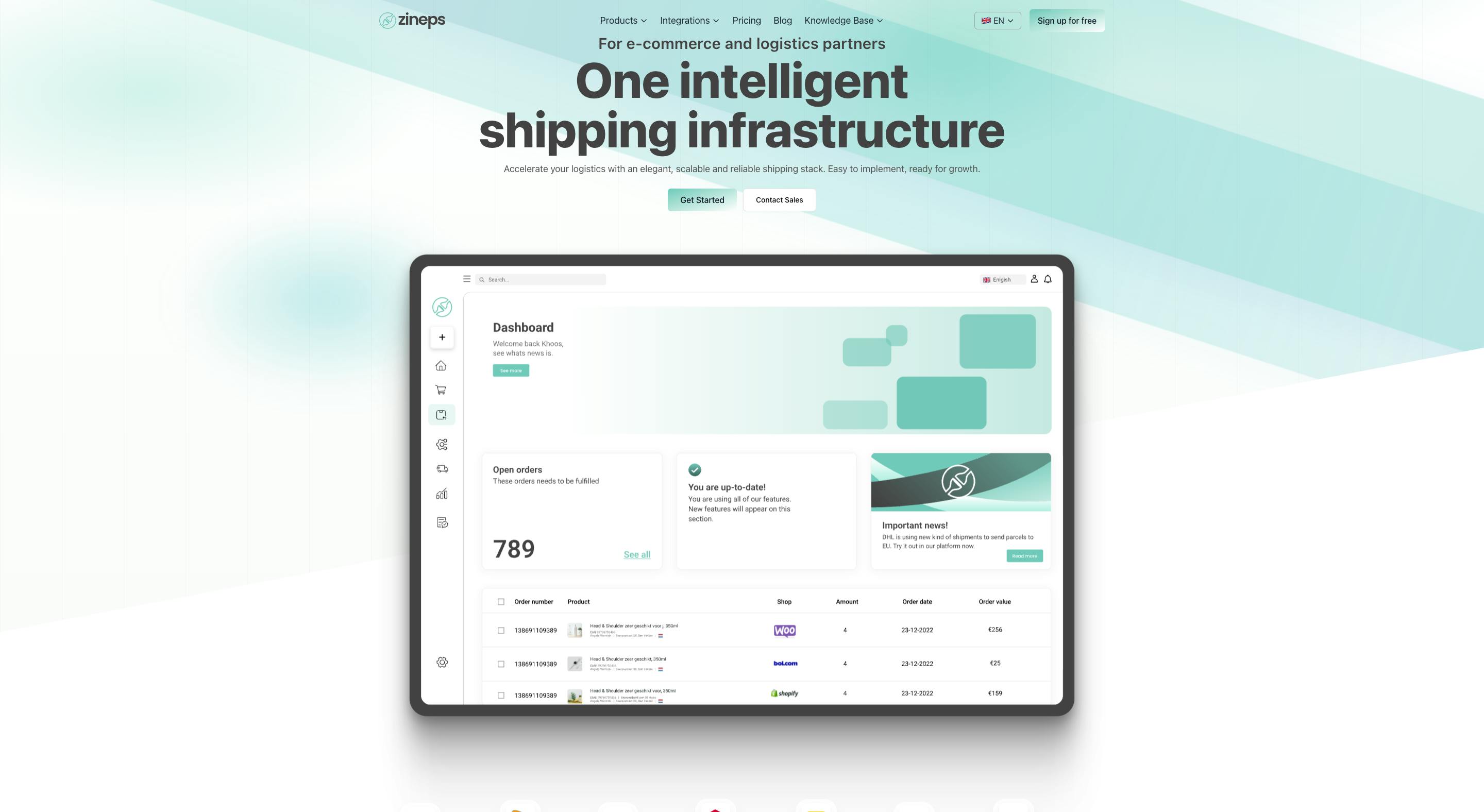
Wanneer je je carriers, fulfillmentproviders en orderbeheersystemen via Zineps verbindt, krijg je niet alleen een trackingdashboard. Je creëert een uniforme datalaag die carrierprestaties op routeniveau inzichtelijk maakt, kostenanomalieën signaleert voordat ze zich opstapelen, en real-time intelligentie voedt in de beslissingen die worden genomen voordat een zending het magazijn verlaat.
Voor Europese e-commerce bedrijven is dit om drie redenen belangrijk:
- Carrierconcentratierisico is reëel. Veel merken zijn afhankelijk van één of twee primaire carriers voor het grootste deel van hun volume. Wanneer die carrier een prestatiedaling heeft, beschikt het bedrijf over geen geautomatiseerd responsmechanisme. Zineps normaliseert prestatiedata over je gehele carriermix zodat je concentratierisico ziet voordat het een servicefout wordt.
- De logistiekdata die je bedrijf genereert is commercieel waardevol maar onderbenut. Elke zending is een datapunt over carrierrouting, doorlooptijd, uitzonderingsfrequentie en kosten per kilo. Het aggregeren en analyseren van die data maakt het tegelijkertijd een onderhandelingstool, een routeoptimalisatie-engine en een vroegtijdig waarschuwingssysteem.
- Logistics intelligence is geen eindbestemming, het is een fundering. De bedrijven die de komende drie jaar zullen winnen in Europese e-commerce zijn niet diegenen met de meeste carriers, maar diegenen met het helderste operationele beeld over al die carriers.
De Toekomst: Van Softwaretool naar Logistiek Besturingssysteem
De volgende evolutie in logistics intelligence zijn niet betere dashboards. Het is de gesloten koppeling tussen intelligentie en actie.
De platforms die deze categorie de komende twee jaar zullen definiëren, zullen niet alleen vertellen dat een carrier onderpresteert op een specifieke route. Ze zullen automatisch toekomstige zendingen herrouten, contractbeoordelingsmeldingen activeren en de carrier-selectielogica aanpassen die wordt uitgevoerd bij de checkout, allemaal zonder handmatige tussenkomst.
Dit is wat we bedoelen wanneer we Zineps omschrijven als het Besturingssysteem voor Zendingen. De intelligentielaag en de uitvoeringslaag zijn geen afzonderlijke producten die geïntegreerd moeten worden. Ze vormen hetzelfde systeem, dat in real time opereert over je volledig logistiek netwerk.
Voor Europese e-commerce bedrijven die navigeren door een carrierlandschap dat complexer wordt in plaats van eenvoudiger, is die architectuur geen luxe. Het is de nieuwe operationele baseline.
De Intelligentiekloof Is Te Dichten
Logistics intelligence software is geen luxecategorie voor enterprise retailers. De combinatie van stijgende carrierprobleempercentages, margedruk in Europese e-commerce en toenemende klantenintolerantie voor bezorgmislukkingen betekent dat operationele helderheid nu een concurrentievereiste is.
De vraag is niet of je moet investeren in betere carrierdata. De vraag is of je wilt dat die investering dashboards of beslissingen oplevert.
Als je klaar bent om te bewegen van reactief carriers beheren naar het met oprechte intelligentie opereren van je logistiek netwerk, laten we je graag zien hoe Zineps dit probleem aanpakt. Het verschil tussen blind vliegen en geïnformeerd vliegen is dichter bij dan de meeste mensen denken.