
De Unified Shipping Stack: Hoe een Logistics OS de Verborgen Kosten van Gefragmenteerde Fulfilment Elimineert
Op het moment dat een klant op bestellen klikt, begint er een race. Elke seconde die verstrijkt zonder bevestiging, elke vervoerder die de overdracht mist, elk systeem dat niet synchroniseert is een verborgen belasting op jouw bedrijf. De meeste e-commerce ondernemers zijn zich bewust van de kosten van trage levering. Veel minder herkennen de diepere en meer structurele kosten van gefragmenteerde verzendinfrastructuur.
Fragmentatie is de stille margekillers in moderne fulfilment. Het is geen enkele catastrofale gebeurtenis, maar een langzame ophoping van wrijving, handmatig werk, gemiste automatiseringsmogelijkheden en datablindevlekken die in de loop van de tijd groeien. De bedrijven die in 2026 winnen op het gebied van logistiek zijn niet noodzakelijkerwijs degenen met de meeste vervoerderscontracten of het snelste magazijn. Het zijn de bedrijven die hun verzendstack hebben geïntegreerd in één coherente operationele laag.
Wat Gefragmenteerde Fulfilment Eigenlijk Inhoudt
Vraag een logistiek manager om hun huidige technologiestack te beschrijven en je hoort een vertrouwd verhaal. Een orderbeheersysteem van de ene leverancier. Een magazijnbeheertool van een andere. Carrier API-integraties gebouwd door een ontwikkelaar die het bedrijf twee jaar geleden heeft verlaten. Een retourportaal dat vorig jaar is toegevoegd. Een tariefvergelijkingstabel die iemand elk kwartaal bijwerkt. En ergens in het midden een team operatiemedewerkers dat handmatig de gaten tussen dit alles overbrugt.
Dit is fragmentatie in de praktijk. Elke tool werd geselecteerd om een specifieke reden, op een specifiek moment in de groei van het bedrijf. Samen vormen ze een ecosysteem dat niemand heeft ontworpen en niemand echt bezit.
De gevolgen zijn voorspelbaar. Data stroomt niet soepel tussen systemen. Labelgeneratie vereist meerdere stappen op verschillende platforms. Carrier-prestatiedata bevindt zich in vier dashboards die niet te reconciliëren zijn. Wanneer er iets misgaat, betekent het diagnosticeren van het probleem het traceren van fouten over een half dozijn verschillende tools, die allemaal niet van nature met elkaar communiceren.
Vijf Plekken Waar Fragmentatie Marge Kost
Begrijpen waar fragmentatie jou geld kost, is de eerste stap naar het elimineren ervan. De verliezen concentreren zich doorgaans in vijf gebieden.
Inefficiëntie bij Carrierselectie
Wanneer carriertoewijzing plaatsvindt in een magazijnbeheersysteem zonder live tariefintelligentie, zijn operators afhankelijk van handmatige regels of vaste carriervoorkeur. Het resultaat is consistent overbesteden aan zones en serviceniveaus die een slimmer systeem automatisch had geoptimaliseerd.
Label en Documentatiefouten
Elke stap waar gegevens handmatig worden ingevoerd, is een stap waar fouten worden geïntroduceerd. Een onjuist adresveld, een incorrecte douanecode, een ontbrekende consignee-referentie: elk creëert een probleem stroomafwaarts dat tijd en geld kost om op te lossen.
Overhead bij Retourverwerking
Zonder een uniforme reverse logistics-laag is retourverwerking onevenredig handmatig. De retour arriveert, iemand logt het in het magazijnsysteem, iemand anders verwerkt de terugbetaling in het handelsplatform, en niemand heeft duidelijk inzicht in of het geretourneerde artikel daadwerkelijk is bijgevuld of afgeschreven.
Analyseverlamming
Wanneer jouw verzendgegevens verspreid zijn over carriersportalen, jouw magazijnsysteem, jouw handelsplatform en een externe trackingtool, wordt het bouwen van een enkel coherent beeld van fulfilment-prestaties een project op zichzelf. De meeste teams genoegen zich met gedeeltelijk inzicht, wat betekent dat beslissingen worden genomen op basis van onvolledige gegevens.
Integratiedebt
Elke point-to-point integratie tussen systemen is een aansprakelijkheid. Het breekt wanneer een van beide systemen zijn API bijwerkt. Het vereist onderhoud en creëert een afhankelijkheid van degene die het heeft gebouwd. Op schaal wordt integratiedebt één van de grootste verborgen kosten in de hele logistieke operatie.
Waarom Unificatie Niet Hetzelfde Is als Consolidatie
Er bestaat een veelvoorkomend misverstand dat het oplossen van fragmentatie betekent dat je voor minder leveranciers kiest. Consolidatie kan helpen, maar het is niet hetzelfde als unificatie en het door elkaar halen van de twee leidt tot de verkeerde oplossing.
Consolidatie betekent het vervangen van vijf tools door drie. Je hebt nog steeds drie tools die moeten communiceren, drie sets gegevens die moeten worden geconcilieerd en drie leveranciersrelaties te beheren. Het fragmentatieprobleem is verminderd maar niet geëlimineerd.
Unificatie betekent het introduceren van een enkele orchestratielaag die boven alle onderliggende tools en systemen zit. De tools zelf kunnen op hun plaats blijven, maar ze zijn verbonden via een gemeenschappelijk API-fabric dat gegevens normaliseert, beslissingslogica automatiseert en uniforme rapportage over de hele fulfilment-operatie beschikbaar stelt.
Dit is het onderscheid tussen een toolstack en een besturingssysteem. Een stack is een verzameling tools. Een besturingssysteem is de intelligentielaag die die tools als één geheel laat functioneren.
Het Logistics OS-model: Één Laag voor de Hele Stack
Een Logistics Operating System doet voor fulfilment wat een besturingssysteem voor een computer doet. Het abstraheert complexiteit, biedt een consistente interface voor de applicaties erboven en beheert de resources eronder.
In logistieke termen zijn de resources eronder jouw vervoerders, magazijnen en last-mile-netwerken. De applicaties erboven zijn jouw handelsplatform, jouw ERP en jouw klantenservicetools. Het Logistics OS bevindt zich ertussen, waarbij het carrierselectie, labelgeneratie, trackingevents, retourverwerking en prestatieanalyse afhandelt via één uniforme API.
GEP's enterprise supply chain-onderzoek toont aan dat organisaties die met geïntegreerde controlesystemen werken materieel lagere totale logistieke kosten bereiken dan die met afzonderlijke puntoplossingen. Een geïntegreerd controlesysteem wordt nu beschouwd als essentiële infrastructuur voor supply chains die op schaal opereren.
Hoe Zineps de Unified Shipping Stack Heeft Gebouwd voor Europese E-commerce
Zineps is van de grond af ontworpen als een Logistics OS, niet als een verzendtool. Het onderscheid doet ertoe in de praktijk.
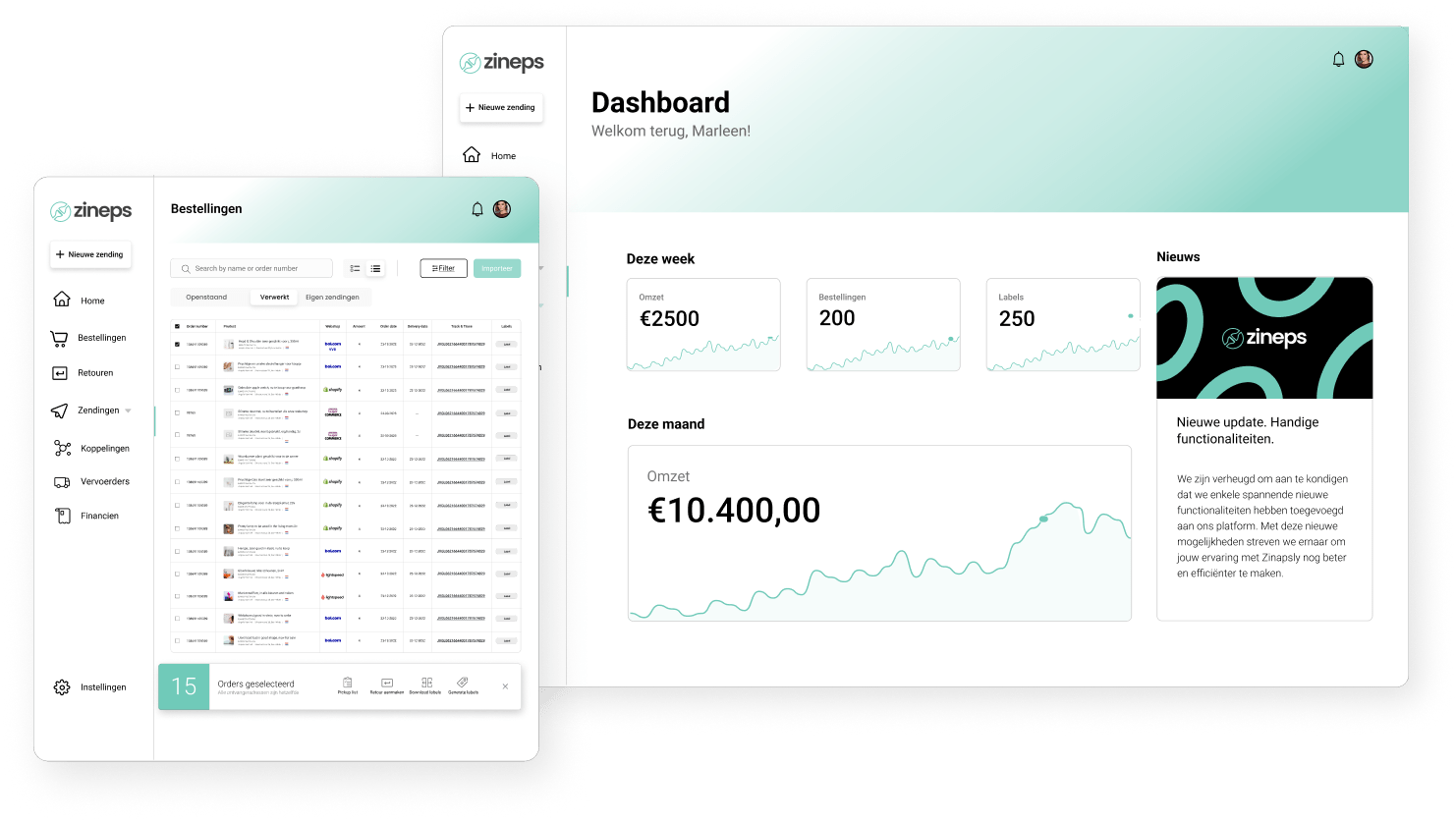
Wanneer een e-commerce ondernemer hun handelsplatform verbindt met Zineps, krijgen ze niet alleen toegang tot carrier-integraties. Ze verbinden zich met een orchestratielaag die carrierselectie, op regels gebaseerde routering, labelgeneratie, douanedocumentatie, trackingeventnormalisatie en prestatieanalyse afhandelt in één geïntegreerde omgeving.
De carrierdekking omvat meer dan 50 logistieke dienstverleners in heel Europa, inclusief internationale express, nationale postnetwerken, regionale specialisten en grensoverschrijdende vervoerders. Ze zijn allemaal toegankelijk via één enkele API, met genormaliseerde eventstreams en consistente dataschema's, ongeacht het oorspronkelijke formaat van de onderliggende carrier.
Verzendregels kunnen nauwkeurig worden geconfigureerd: op gewichtsschaal, bestemmingsland, productcategorie, orderwaarde, leveringsbelofte of elke combinatie. De regelmotor evalueert elke order in realtime tegen elke van toepassing zijnde regel en selecteert automatisch de optimale carrier. Wanneer omstandigheden veranderen, worden de regels centraal bijgewerkt en treden ze onmiddellijk in werking op elk kanaal dat is verbonden met het platform.
Retouren worden afgehandeld via hetzelfde platform, met branded retourportalen, carrier-agnostische retourlabelgeneratie en retourevents die terugstromen naar dezelfde rapportageomgeving als uitgaande zendingen. Operators zien hun volledige fulfilment-beeld op één plek.
Waar je op Moet Letten bij het Evalueren van een Logistics OS
Niet elk platform dat beweert verzending te unificeren, komt die belofte ook na. Bij het evalueren van opties zijn dit de vragen die onthullen of je te maken hebt met een echte Logistics OS of een verpakt integratietool.
- Verbindt het met jouw bestaande commerce en magazijnsystemen via native integraties, of is er maatwerkontwikkeling nodig? Een echte Logistics OS zou kant-en-klare connectoren voor grote platforms moeten hebben en een stabiele API voor alles wat op maat is.
- Biedt het carrier-neutrale routering, of begunstigt het bepaalde carriers in zijn aanbevelingslogica? Echte neutraliteit betekent dat het platform de beste carrier voor elke zending selecteert op basis van jouw regels en realtime prestatiegegevens, niet op basis van commerciële afspraken.
- Biedt het uniforme analyses over alle carriers en kanalen in één dashboard? Als je het platform moet verlaten om inzicht te krijgen in jouw prestaties, is de unificatie onvolledig.
- Verwerkt het retouren via dezelfde interface als uitgaande zendingen? Een platform dat reverse logistics als bijzaak behandelt, is geen echte operationele laag.
- Is het platform specifiek gebouwd voor Europese logistiek? Europese e-commerce werkt in tientallen nationale postnetwerken, regelgevingsomgevingen en consumentenverwachtingen. Een platform dat is ontworpen voor Europese complexiteit vanaf het begin is fundamenteel anders dan een platform dat als bijzaak naar Europa is uitgebreid.
Van Toolstack naar Operationeel Voordeel
De bedrijven die de meest veerkrachtige en kostenefficiënte logistieke operaties zullen opbouwen de komende vijf jaar zijn niet degenen die meer tools toevoegen. Het zijn degenen die het bindweefsel tussen tools elimineren door het te vervangen door een echte operationele laag.
De unified shipping stack is geen functie. Het is een strategische beslissing over hoe je wilt dat jouw logistieke infrastructuur functioneert. Het bepaalt of jouw fulfilment-operatie een bron van operationele belasting is of een bron van concurrentievoordeel.
Zineps bestaat om dat operationele voordeel toegankelijk te maken voor elk e-commerce bedrijf in Europa, ongeacht volume, complexiteit of technische middelen. De infrastructuurlaag is gebouwd. De vraag is of jouw verzendstack klaar is om een besturingssysteem te worden.