
What Is Multi-Carrier Shipping? A Complete Guide for Ecommerce
What Is Multi-Carrier Shipping? A Complete Guide for Ecommerce
Shipping has become one of the most important operational components of ecommerce businesses.
As online stores expand to new markets and customer expectations for fast delivery continue to increase, logistics operations become significantly more complex.
Many ecommerce companies rely on multiple shipping carriers instead of working with a single provider. This strategy is known as multi-carrier shipping.
Multi-carrier shipping allows businesses to select different carriers depending on factors such as destination, shipping cost, delivery speed and parcel characteristics.
In this guide we explain what multi-carrier shipping is, how it works and why ecommerce businesses use this approach to optimize logistics operations.
What Is Multi-Carrier Shipping
Multi-carrier shipping is a logistics strategy in which businesses use multiple shipping providers to deliver orders to customers.
Instead of relying on a single carrier, companies integrate several shipping partners and choose the most suitable provider for each shipment.
For example:
- domestic shipments may be handled by a national carrier
- international deliveries may be shipped through global providers
- express deliveries may use premium carriers
Using multiple carriers allows ecommerce companies to optimize both shipping costs and delivery performance.
This strategy is widely used by ecommerce businesses operating in multiple markets.
Why Ecommerce Businesses Use Multiple Carriers
Ecommerce companies often adopt a multi-carrier shipping strategy to improve logistics flexibility and efficiency.
Delivery Flexibility
Different carriers perform better in different regions. Using multiple providers allows companies to select the most reliable option depending on the destination.
Cost Optimization
Shipping costs can vary significantly between carriers. Multi-carrier strategies allow businesses to choose the most cost-efficient provider for each shipment.
Delivery Speed
Some carriers specialize in express delivery services, while others are more efficient for standard shipping.
Risk Management
Relying on a single carrier can create operational risks. If a provider experiences delays or disruptions, businesses using multiple carriers can quickly switch to alternatives.
How Multi-Carrier Shipping Works
In traditional logistics workflows, operations teams manually choose a carrier for each shipment.
However, modern ecommerce companies often rely on shipping automation platforms to manage multi-carrier shipping more efficiently.
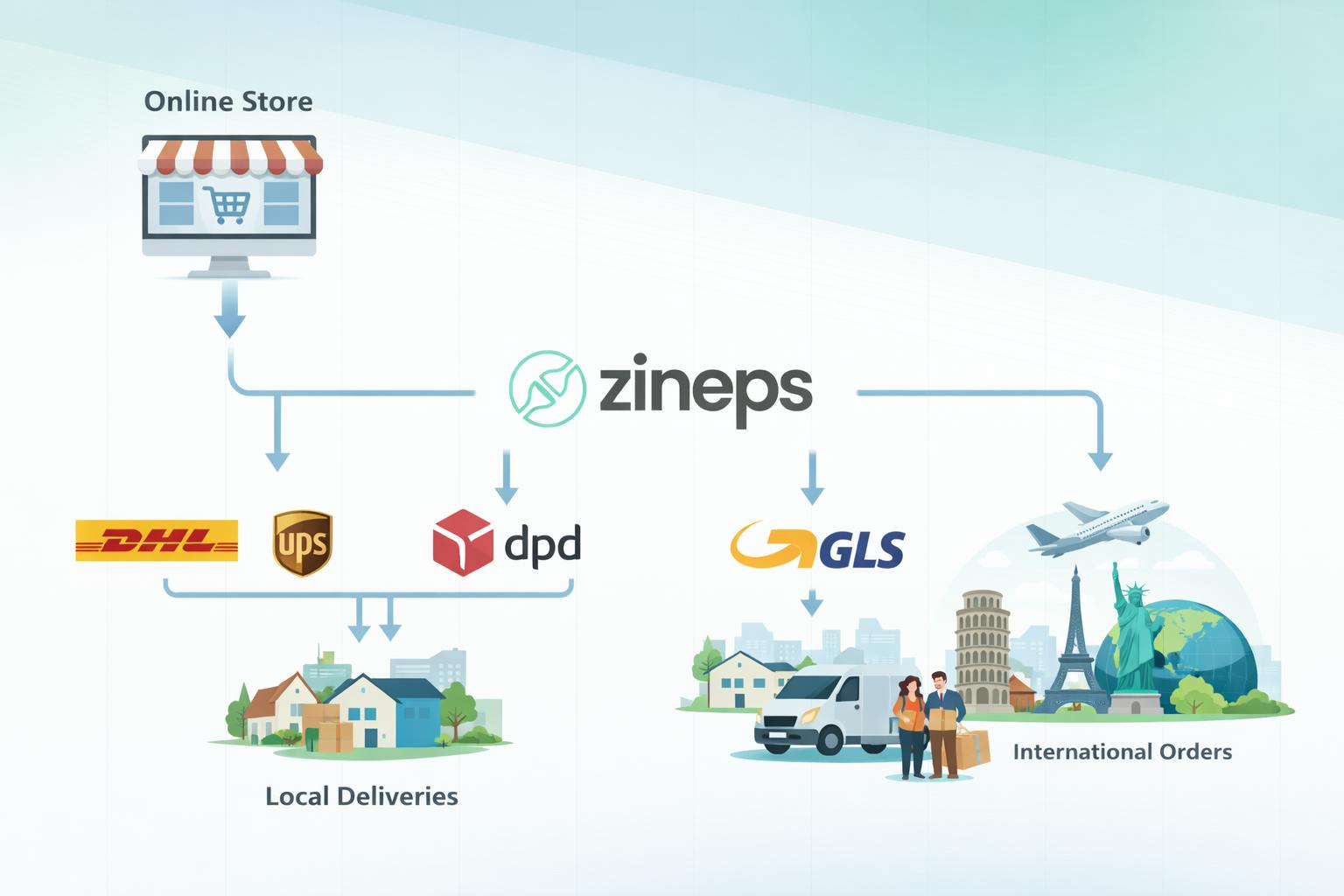
A typical multi-carrier shipping workflow looks like this:
- Orders are imported from the ecommerce platform
- The shipping system analyzes predefined shipping rules
- The most suitable carrier is selected automatically
- Shipping labels are generated
- Tracking information is sent to the customer
Platforms such as Zineps allow ecommerce businesses to automate this entire workflow through one centralized shipping platform.
Learn more about the platform:
Examples of Shipping Carriers Used in Multi-Carrier Logistics
Many ecommerce businesses combine several global and regional shipping carriers.
Examples include:
- DHL
- UPS
- DPD
- GLS
- FedEx
- PostNL
- Bpost
Using multiple carriers allows businesses to optimize delivery performance across different regions and shipping scenarios.
For example, one carrier may be more efficient for domestic deliveries while another may provide better international coverage.
Benefits of Multi-Carrier Shipping
Adopting a multi-carrier shipping strategy provides several operational benefits.
Lower Shipping Costs
Businesses can choose the most cost-efficient carrier depending on shipment characteristics.
Faster Delivery Times
Companies can select carriers that provide faster delivery for specific regions.
Improved Customer Experience
Offering multiple delivery options can improve checkout flexibility and customer satisfaction.
Logistics Scalability
Multi-carrier logistics systems allow ecommerce businesses to scale shipping operations as order volumes increase.
How Shipping Automation Platforms Support Multi-Carrier Logistics
Managing multiple carriers manually can quickly become complicated.
This is why many ecommerce companies use shipping automation platforms to manage multi-carrier shipping workflows.
These platforms connect ecommerce systems with multiple logistics providers and automate key shipping processes.
With platforms like Zineps, businesses can:
- connect multiple carriers
- automate carrier selection
- generate shipping labels automatically
- manage tracking updates and returns
- scale shipping operations globally
Explore available integrations:
https://www.zineps.com/integrations
Shipping automation software helps businesses simplify logistics operations while maintaining flexibility.
FAQ
What is multi-carrier shipping
Multi-carrier shipping is a logistics strategy where businesses use multiple shipping providers instead of relying on a single carrier.
Why do ecommerce businesses use multiple carriers
Using multiple carriers helps businesses optimize shipping costs, delivery speed and logistics flexibility.
What software supports multi-carrier shipping
Many shipping automation platforms allow businesses to manage multiple carriers from one centralized system.
Ready to Manage Multi-Carrier Shipping?
Managing multiple shipping providers manually can become complex as ecommerce operations grow.
Zineps helps businesses connect carriers, automate shipping workflows and centralize logistics operations in one platform.
Discover the platform: