
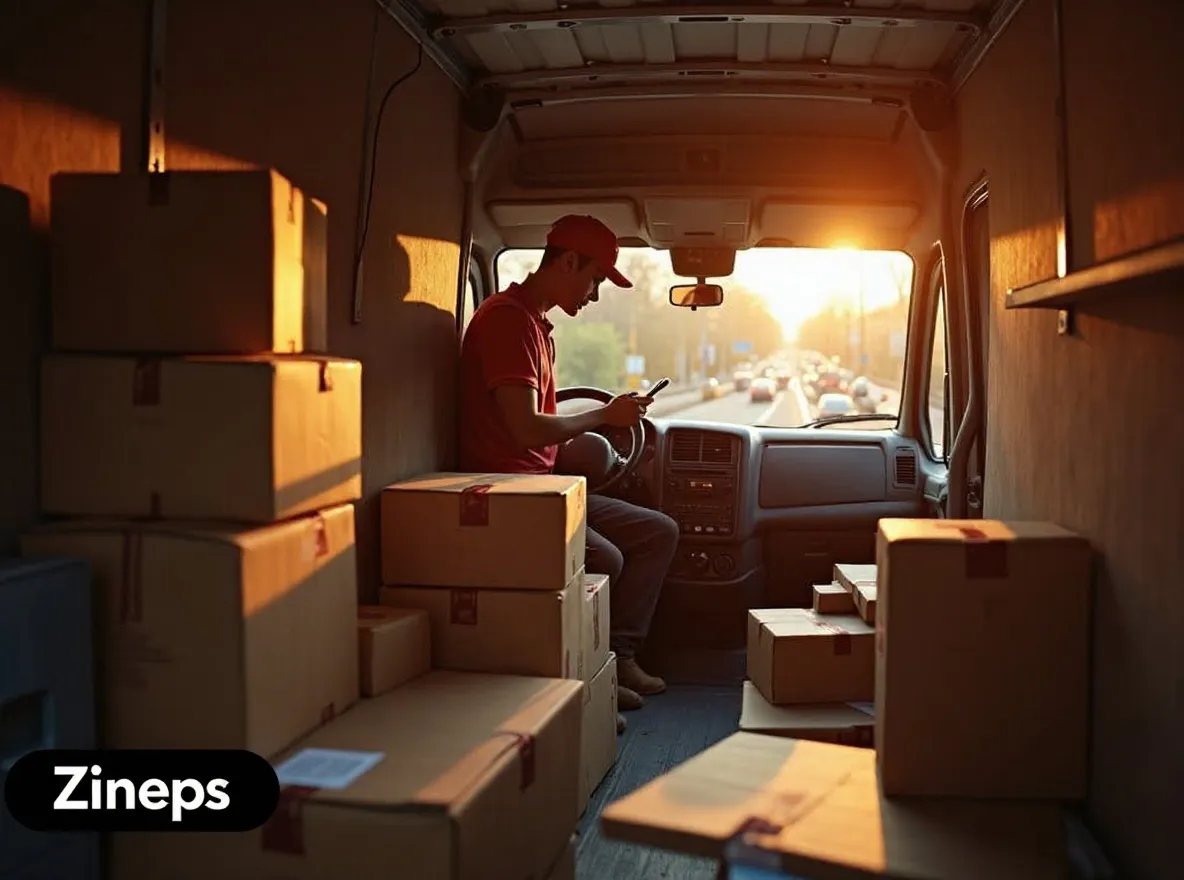
Why TikTok Shop Is Breaking the Way Europe Plans Parcel Capacity
Since TikTok Shop opened for business in the Netherlands, Belgium, Poland and Austria on 15 June 2026, Dutch logistics commentators have been describing the same phenomenon from different angles. Twinkle Magazine summed it up bluntly: the platform is putting a turbo on e-commerce demand, and the parcel chain is running out of breath. A single creator video can now push a product past thirty sales a second, a spike that has nothing to do with the gradual, seasonal demand curves that most warehouse slotting plans and carrier capacity contracts were built to absorb.
That is not a marketing exaggeration. It is a structural mismatch between how demand is generated and how European parcel networks are still provisioned. Most shippers plan capacity the way they always have: rolling weekly or monthly averages, seasonal uplifts pencilled in around Black Friday and Sinterklaas, and a carrier contract that guarantees a fixed daily pickup volume in exchange for a negotiated rate. That model works when demand is driven by search intent, email campaigns and paid ads, channels that move in hours or days. It breaks the moment demand is driven by a recommendation algorithm that can move in minutes.
When a Recommendation Algorithm Becomes Your Demand Forecast
Amazon, Bol and Zalando still largely reward the same signal: a shopper searches for something they already intend to buy. TikTok Shop rewards something else entirely, attention. A product does not need existing purchase intent behind it. It needs a creator, a hook, and an algorithm willing to push the clip to a few hundred thousand extra feeds overnight. When that happens, the sales curve is no longer a curve. It is a step function, and the step can happen at two in the morning on a Tuesday.
For a shipper, that means the single most important forecasting input has quietly changed. It is no longer last year's seasonality or last month's growth rate. It is content performance, a metric that lives in a marketing dashboard, not a warehouse management system, and one that most logistics teams have never been asked to watch. Brands that are winning on TikTok Shop are, whether they realise it or not, running a demand sensing problem that their shipping infrastructure was never built to solve.
Why Weekly Capacity Planning Cannot Keep Up
Most carrier relationships in Europe, even good ones, are built around predictability. A 3PL agrees to handle a forecasted volume band. A national carrier allocates a pickup slot and a driver route based on the previous month's average. Warehouse teams schedule shifts against a forecast that gets revised once a week, sometimes once a day if the operation is unusually agile. All of this is sensible when volume moves by single digit percentages week over week.
An algorithm driven spike does not move by single digit percentages. It can multiply order volume by five or eight times within a 24 to 48 hour window, then fall back just as quickly once the algorithm moves on to the next clip. Three consequences follow almost immediately for a shipper that has not planned for this specific failure mode.
- Contracted daily pickup volumes are exceeded, and the carrier either delays collection to the next slot or charges an out of contract premium to add an extra run
- Warehouse pick and pack capacity, staffed against the forecast, cannot clear the backlog same day, pushing promised delivery windows out by a day or more
- The order mix skews toward single item, low value parcels typical of impulse buying, which is exactly the profile that erodes margin fastest under most carrier rate cards
None of this is a failure of execution. It is a failure of design. A capacity plan built around weekly averages has no mechanism for absorbing a demand signal that operates on an hourly clock.
The Hidden Cost Nobody Budgets For: Returns
The second effect gets far less attention than the capacity squeeze, and it may be more expensive over a full quarter. Purchases driven by a fifteen second video, a countdown timer and a creator commission are, by design, made with less comparison shopping than a search driven purchase. The buyer has not read three reviews or compared two competing listings. They have reacted to a moment.
Reaction purchases return at a materially higher rate than considered ones. Retail returns research has long shown that impulse and social commerce purchases carry return rates well above the typical e-commerce baseline, and early reporting on TikTok Shop's European rollout points in the same direction, with category level return rates in fashion and beauty running noticeably hotter than the same categories sold through a search led storefront. That reverse logistics volume lands on exactly the same constrained network that just absorbed the outbound spike, usually within one to two weeks of the original order, which means the strain is not a single event. It is a second wave.
A Worked Example: What an Eight Times Spike Actually Costs
Picture a mid sized European apparel brand shipping a steady 4,000 parcels a month through a single contracted carrier, priced on a volume band that assumes roughly 130 to 150 parcels a day. A creator with a large following posts an unscripted try on video featuring one SKU. The clip is picked up by the algorithm overnight. By the next afternoon, the brand has 1,100 orders for that single item, more than an entire week's normal volume, landing inside a 36 hour window.
The contracted carrier can absorb the first 150 to 200 parcels inside the existing pickup slot. Everything beyond that either waits for the next scheduled collection, adding a full day to the delivery promise, or gets pushed out through a second, uncontracted carrier at rack rate, typically 30 to 45 percent above the negotiated price for a comparable service level. Assume half of the overflow, around 450 parcels, moves at that premium. At a conservative five euro per parcel premium, that single spike adds in the region of 2,250 euros in emergency shipping cost, before counting the customer service load from delayed deliveries or the returns that follow two weeks later on a product bought on impulse rather than intent. A brand that sees even one or two clips like this go unexpectedly viral each quarter is absorbing a five figure annual cost that never shows up as a line item on any shipping budget, because nobody built a budget line for it.
How Zineps Turns Algorithmic Demand Into a Manageable Shipping Decision
This is precisely the gap Zineps was built to close. As the operating system for shipments, Zineps does not ask a merchant to predict which video will go viral or to negotiate a bigger contracted volume band with a single carrier and hope it is enough. It gives every order access to live rates and available capacity across the entire connected carrier network at the moment a label is created, not the moment a contract was signed months earlier.
That distinction matters most exactly when demand stops behaving like a forecast. When a single SKU spikes overnight, Zineps can route the overflow across multiple carriers in real time, choosing whichever combination of price and service level still protects the delivery promise, instead of a single carrier hitting its ceiling and every order behind it queuing for the next slot. We described the mechanics of this shift away from static, pre-negotiated rates in our look at flat rate shipping versus real time rate shopping, and a viral sales spike is the clearest possible case for why that shift matters.
The same logic applies to the launch readiness question brands faced when TikTok Shop first arrived in the Netherlands. Our original playbook for that launch focused on getting the integration and fulfillment basics right. What has become clear in the weeks since is that the harder problem is not the integration itself, it is building a shipping layer flexible enough to absorb demand that the algorithm, not the merchant, controls.
A Readiness Checklist for Algorithm Driven Sales Channels
- Separate your TikTok Shop and other creator driven channels from your core sales forecast, and track content performance as a leading indicator your logistics team actually sees, not just marketing
- Confirm what happens contractually the moment you exceed your carrier's daily pickup volume, and get the overflow rate in writing rather than discovering it during a spike
- Pre qualify at least one additional carrier for overflow capacity before you need it, so a viral moment does not become the first time that integration gets tested
- Model the return rate for impulse driven categories separately from your considered purchase categories, and size reverse logistics capacity accordingly
- Build a same day rule for when order volume on a single SKU crosses a defined threshold, so overflow routing triggers automatically rather than waiting for someone to notice
Common Questions
Is this really different from a normal seasonal peak like Black Friday?
Yes, in one important respect. A seasonal peak is scheduled, so carriers and warehouses can staff and allocate capacity in advance. An algorithm driven spike has no calendar. It can happen on an ordinary Tuesday with no promotion running, which is exactly why a fixed weekly capacity plan cannot absorb it the way it absorbs a known peak.
Does this only affect brands that sell heavily through TikTok Shop?
No. Any channel where a recommendation algorithm, rather than search intent, drives discovery carries the same risk, including short form video ads and influencer led drops on other platforms. TikTok Shop is simply the clearest and most current example in the European market right now.
How quickly can a merchant add real time overflow capacity across carriers?
Most merchants already running a single carrier integration can connect to a multi carrier orchestration layer like Zineps within a few weeks, since the technical integration builds on order data that already exists. The more valuable work is agreeing the business rules in advance, which carrier takes overflow first and at what threshold, so the system can act automatically the moment a spike starts rather than waiting for a manual decision.
Weekly capacity planning was never designed for demand that an algorithm can create in minutes and walk away from within a day. That is not a reason to fear channels like TikTok Shop. It is a reason to stop treating carrier capacity as something negotiated once a year and start treating it as something managed in real time, order by order. That is the operating system Zineps was built to be.