

Pakket verzenden kosten: wat betaal je en hoe bespaar je?
Pakket verzenden kosten: wat betaal je en hoe bespaar je?
De kosten voor het verzenden van een pakket lijken vaak duidelijk, maar in de praktijk zijn ze complexer dan ze op het eerste gezicht lijken. Zeker voor webshops kunnen verzendkosten snel oplopen — vaak zonder dat direct duidelijk is waar die kosten vandaan komen.
Veel bedrijven kijken alleen naar de prijs per label, maar dat is slechts een deel van het verhaal. De echte kosten zitten in inefficiëntie, handmatig werk en verkeerde keuzes per zending.
Wil je echt besparen? Dan moet je verder kijken dan alleen tarieven.
Quick answer
De kosten voor een pakket verzenden hangen af van gewicht, formaat, bestemming en vervoerder. Maar de grootste besparing zit meestal niet in lagere tarieven, maar in hoe je je verzendproces inricht: automatisering, multi-carrier verzending en slimme keuzes per order maken het verschil.
Waar bestaan verzendkosten eigenlijk uit?
Veel webshops onderschatten hoeveel factoren invloed hebben op de totale verzendkosten.
Gewicht en formaat
Hoe groter en zwaarder het pakket, hoe hoger de kosten. Daarnaast speelt volumetrisch gewicht vaak een rol bij carriers.
Bestemming
Binnen Nederland zijn tarieven relatief stabiel. Zodra je internationaal verzendt, lopen kosten snel op en verschillen ze per vervoerder.
Service level
Express verzending, avondlevering of specifieke afleveropties zijn duurder dan standaard verzending.
Retourkosten
Retouren worden vaak vergeten, maar hebben directe impact op je totale verzendkosten — vooral in sectoren zoals fashion.
Waarom je waarschijnlijk te veel betaalt voor verzending
Veel ecommerce bedrijven verliezen geld op verzending zonder dat ze het doorhebben.
Je gebruikt één vervoerder voor alles
Wat goedkoop lijkt, is niet altijd de beste optie. Verschillende carriers presteren beter in verschillende situaties.
Je kiest handmatig per order
Handmatig kiezen kost niet alleen tijd, maar leidt ook tot inconsistente en vaak duurdere keuzes.
Je hebt geen inzicht in prestaties
Zonder data weet je niet welke vervoerder echt goed presteert op prijs, snelheid en betrouwbaarheid.
Wat kost een pakket verzenden gemiddeld?
De exacte prijs verschilt per situatie, maar dit zijn globale richtlijnen:
- Binnen Nederland: €4 – €8
- Binnen Europa: €8 – €15
- Internationaal: €15 – €25+
Let op: dit zijn alleen labelprijzen. De echte kosten liggen vaak hoger door inefficiëntie en operationele tijd.
Hoe kun je verzendkosten verlagen?
Hier zit de grootste winst voor webshops.
Gebruik meerdere vervoerders
Met een multi-carrier aanpak kies je niet één partij, maar gebruik je meerdere carriers afhankelijk van de situatie.
👉 Niet elke zending hoeft via dezelfde vervoerder te gaan.
Automatiseer je verzendproces
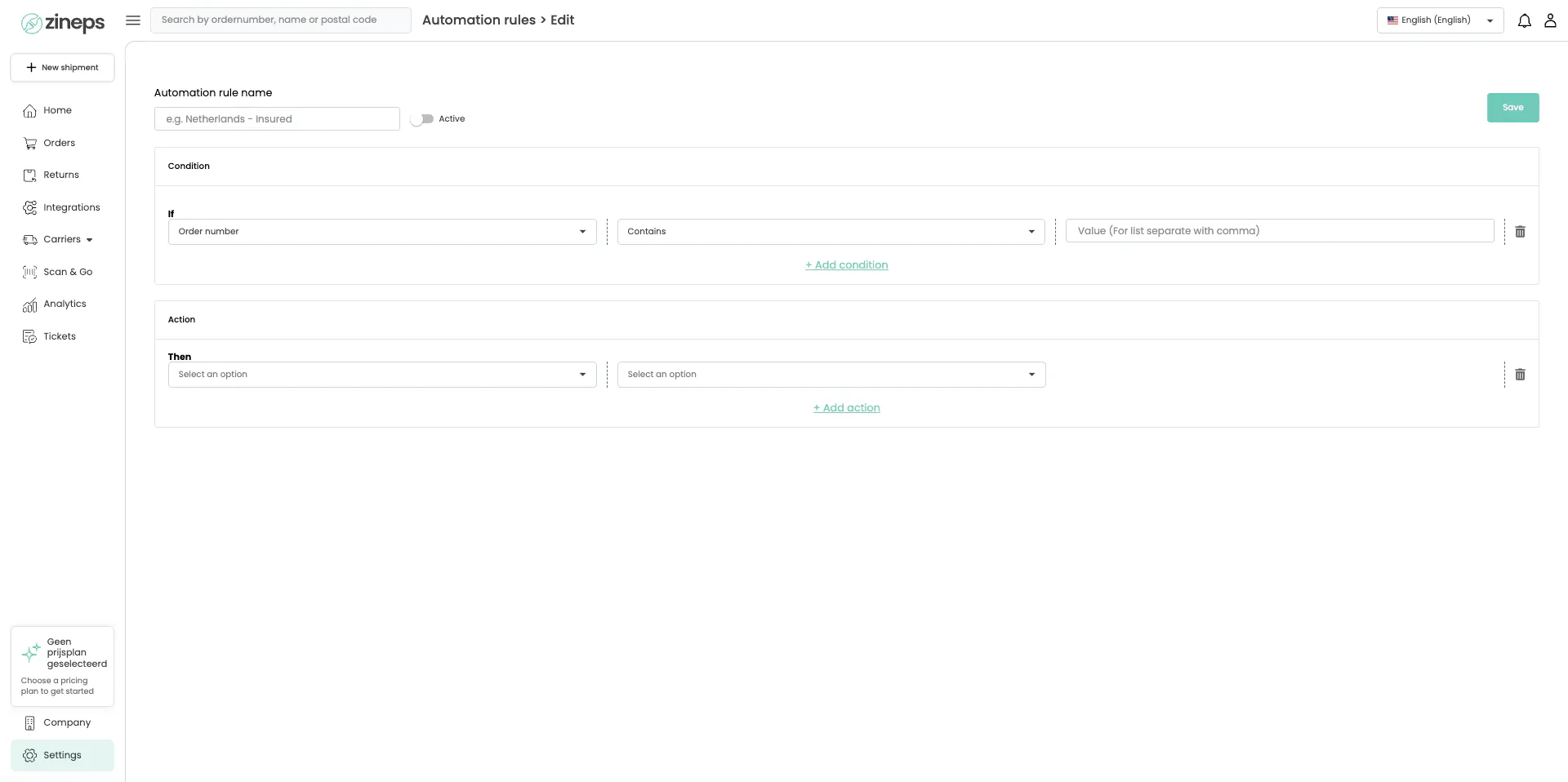
Door regels in te stellen (bijvoorbeeld op basis van gewicht, bestemming of orderwaarde), voorkom je handmatig werk en fouten.
👉 Minder handmatig werk = lagere kosten
Optimaliseer per land en ordertype
Wat werkt in Nederland, werkt niet automatisch in Duitsland of België. Door je verzending per markt te optimaliseren, voorkom je onnodige kosten.
Verminder retourkosten
Een goed retourproces verlaagt niet alleen kosten, maar ook supportdruk en frictie voor de klant.
De rol van verzendsoftware in kostenbesparing
Hier maken veel webshops het verschil.
Met een goed verzendplatform kun je:
- automatisch de beste vervoerder kiezen
- labels sneller genereren
- meerdere carriers combineren
- inzicht krijgen in kosten en prestaties
- retouren efficiënter beheren
👉 Je bespaart dus niet alleen op tarieven, maar op je volledige operatie.
Hoe Zineps helpt om verzendkosten te verlagen
Voor webshops die hun verzendkosten echt willen optimaliseren, biedt Zineps een centrale oplossing.
In plaats van losse tools en handmatige processen werk je vanuit één platform waarin alles samenkomt.
Met Zineps kun je:
- automatisch de beste verzendoptie per order kiezen
- meerdere carriers combineren
- je eigen contracten of een netwerk gebruiken
- regels instellen voor verzending
- inzicht krijgen in kosten via analytics
- retouren en tracking centraal beheren
Voor groeiende webshops betekent dit: minder fouten, minder tijdverlies en lagere kosten per order.
Wanneer is het tijd om je verzendproces te optimaliseren?
Veel bedrijven wachten te lang. Dit zijn duidelijke signalen:
- verzendkosten blijven stijgen
- je team is veel tijd kwijt aan labels
- je werkt met meerdere tools zonder overzicht
- je hebt weinig inzicht in prestaties
- retouren zijn moeilijk te beheren
Als je jezelf hierin herkent, laat je waarschijnlijk geld liggen.
FAQ
Wat bepaalt de kosten van een pakket verzenden?
De belangrijkste factoren zijn gewicht, formaat, bestemming, vervoerder en service level.
Hoe kan ik verzendkosten verlagen?
Door meerdere carriers te gebruiken, automatisering toe te passen en je verzendstrategie per order te optimaliseren.
Wat is goedkoper: één of meerdere vervoerders?
In de meeste gevallen is een multi-carrier aanpak goedkoper, omdat je per zending de beste optie kiest.
Zijn retouren inbegrepen in verzendkosten?
Vaak niet, maar ze hebben wel grote impact op je totale kosten.