
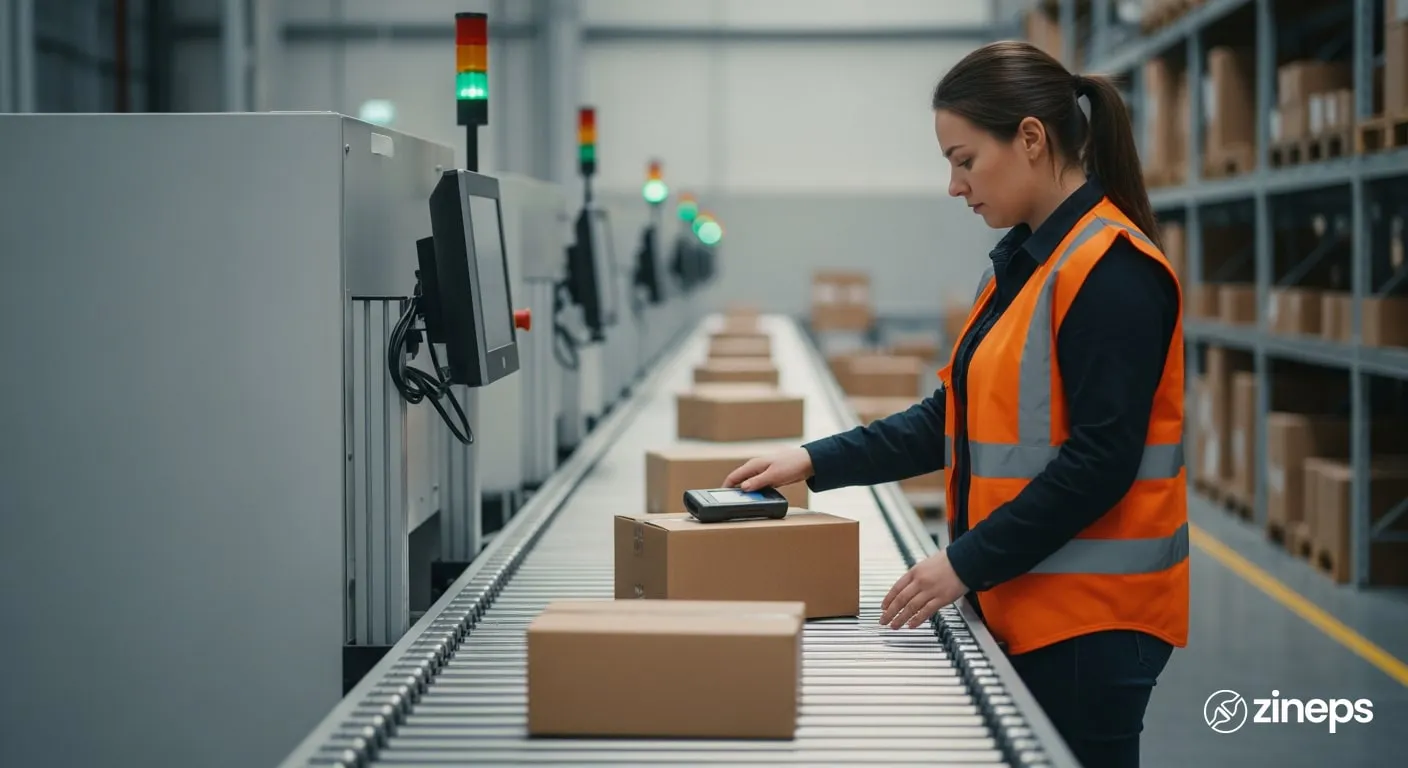
Real-Time Inventory Fulfillment Is Reshaping Warehousing
Real-time inventory fulfillment is quietly rewriting one of the most physical parts of e-commerce: the warehouse itself. A recent industry commentary argues that the traditional model of holding large static inventory in centralized distribution centers is giving way to something faster and more distributed, a shift with direct consequences for how e-commerce operators plan fulfillment, and for the industrial real estate built to support it.
The core argument is straightforward. When supply chains can move and reprice inventory in near real time, the old logic of stockpiling goods far in advance in a handful of large regional warehouses starts to look expensive and slow compared to leaner, more distributed, more responsive alternatives. That has knock-on effects not just for logistics teams, but for how warehouse space itself gets built, located, and used.
For e-commerce operators, this is not an abstract real estate story. Real-time inventory fulfillment changes where stock should sit, how much of it is worth holding at all, and how fulfillment networks should be designed to deliver quickly without tying up capital in warehouses full of goods waiting for demand to show up.
What the end of inventory actually means
The phrase is provocative, but the underlying shift is about reducing dependence on large, static inventory buffers rather than eliminating inventory outright. Real-time visibility into demand signals, supplier lead times, and in-transit stock lets operators hold less safety stock while still meeting delivery promises, because they can react to actual demand rather than forecasting it months in advance and hoping the forecast holds.
This depends on infrastructure that didn't widely exist a decade ago: connected systems that track inventory across warehouses, in-transit shipments, and even retail locations as a single real-time pool, rather than siloed static snapshots updated overnight or weekly.
Why static safety stock rules break down first
Most legacy inventory systems set safety stock using a fixed rule, a certain number of days of average demand, recalculated periodically rather than continuously. That approach works reasonably well when demand is stable and predictable, but it breaks down quickly for fast-moving or trend-driven products, where a static rule either ties up excess capital in slow movers or leaves popular items chronically understocked between recalculation cycles.
Why this is rewriting industrial real estate
Large centralized distribution centers made sense when inventory sat still for weeks or months and speed to the end customer was a secondary concern. As real-time fulfillment models let operators promise faster delivery from smaller, more numerous locations closer to customers, the value of a handful of giant, remote warehouses declines relative to a distributed network of smaller, well-located fulfillment points.
That shift shows up directly in how industrial real estate gets developed and leased: demand growing for smaller urban and suburban fulfillment footprints, and less appetite for the kind of massive, far-from-population-centers warehouse space that defined the previous era of e-commerce logistics buildout.
The mechanics behind real-time fulfillment
Data has to move as fast as the goods
Real-time inventory fulfillment only works if inventory data, across every node in the network, is accurate and current. A warehouse management system that updates once a day cannot support decisions about where to route an order in the next few minutes. This is as much a data and systems problem as a physical logistics one.
Multi-carrier and multi-node flexibility becomes essential
When stock is distributed across more, smaller locations, the logistics layer connecting those locations to customers has to flex accordingly, choosing the right carrier and node for each order dynamically rather than relying on one fixed shipping path from one central warehouse.
The role of automation inside the smaller footprint
Smaller, more distributed fulfillment locations only make economic sense if they can operate efficiently at a smaller scale, which is where automation, from pick-to-light systems to robotics, plays a growing role. Without some degree of automation, a network of many small fulfillment points can end up costing more per order to run than a smaller number of large, labor-efficient centers, even before accounting for the real-time data layer connecting them.
What this means for European fulfillment networks
European e-commerce operators face a particular version of this shift because of how fragmented the region's delivery landscape already is. A brand serving customers across the Netherlands, Belgium, Germany, and France has to reconcile real-time fulfillment decisions with different carrier networks, delivery expectations, and cross-border customs rules in each market, which makes the underlying data and routing layer even more important than in a single, uniform domestic market.
A distributed fulfillment strategy that works well in one European market does not automatically translate to another, since local delivery speed expectations, preferred carriers, and last-mile infrastructure all vary. Real-time fulfillment decisions have to account for that variation node by node, rather than applying one fixed logic across the whole region.
The business impact for e-commerce operators
The upside is real: less capital tied up in idle inventory, faster delivery promises that are actually achievable, and a fulfillment network that can adapt as demand shifts between regions or channels. The downside, if the transition is handled poorly, is fragmentation: more locations to manage, more complexity in routing decisions, and a real risk of inconsistent delivery experience if the systems connecting those locations aren't genuinely real time.
Operators who get this right treat it as an integration problem first and a real estate problem second: the physical network only pays off if the data and routing logic behind it can actually make real-time decisions, order by order, about where stock should come from and how it should move.
Measuring whether the shift is actually working
The clearest sign that a real-time fulfillment strategy is paying off is not lower inventory alone, since that can just as easily reflect being understocked. Operators should track a combination of metrics together, inventory turns, in-stock rate at the point of purchase, and delivery promise accuracy, since real-time fulfillment should improve all three simultaneously rather than trading one off against another.
What e-commerce and logistics teams should do
Moving toward a more real-time fulfillment model is less about a single big decision and more about a sequence of practical changes.
- Audit current inventory visibility, checking whether stock levels across all locations and in-transit shipments are actually visible in near real time, not just at day's end.
- Evaluate smaller, more distributed fulfillment locations for categories where delivery speed matters most to customers.
- Build routing logic that can dynamically choose the best fulfillment node and carrier per order, rather than defaulting to a single fixed path.
- Treat real estate and network design decisions as downstream of data and systems capability, not the other way around.
- Pilot the shift in one region or product category before committing capital to a full network redesign.
Common questions
Does real-time fulfillment mean e-commerce brands should hold no inventory at all?
No. It means holding inventory more efficiently and in better locations, based on real demand signals, rather than eliminating stock entirely. Some buffer inventory remains necessary for most categories, but real-time visibility reduces how much of it needs to sit idle in any one place.
Is this shift only relevant to large retailers with big warehouse footprints?
No, smaller e-commerce operators feel the pressure too, often more acutely, since they have less capital to tie up in static inventory and more to gain from flexible, distributed fulfillment that doesn't require owning a large warehouse network outright.
What's the biggest risk in moving toward real-time fulfillment?
The most common failure mode is building or leasing more distributed physical locations without first solving the data and routing problem behind them, which creates more operational complexity without the responsiveness the model is supposed to deliver.
Do smaller e-commerce brands need to build their own distributed warehouse network?
No. The point is not that every operator needs to own a network of small warehouses, but that fulfillment decisions should be driven by real-time data regardless of whether the underlying locations are owned, leased, or accessed through third-party logistics and fulfillment partners spread across a region.
How does automation change the calculus for smaller fulfillment locations?
Automation lowers the labor cost and error rate of running a smaller site, which is often what makes a distributed network financially viable in the first place. Without it, the overhead of running many small locations can outweigh the delivery-speed benefit real-time fulfillment is meant to deliver.
Does this trend apply equally to fast-moving and slow-moving product categories?
No. Real-time fulfillment delivers the most value for fast-moving, trend-sensitive, or seasonal categories where demand shifts quickly and static forecasting struggles. Slower-moving staple products can often still be managed effectively with more traditional, less real-time inventory approaches, so operators get the most return by applying this first where demand volatility is highest.
Real-time inventory fulfillment is ultimately a logistics infrastructure question dressed up as a real estate trend. The warehouses and fulfillment points matter less than the system deciding, order by order, which location and which carrier should handle a given shipment right now, not last week's forecast. That is precisely the layer Zineps operates in as a Logistics OS for e-commerce, giving operators the multi-carrier, multi-node flexibility to make real-time fulfillment decisions without having to first solve the entire warehouse network by themselves.