
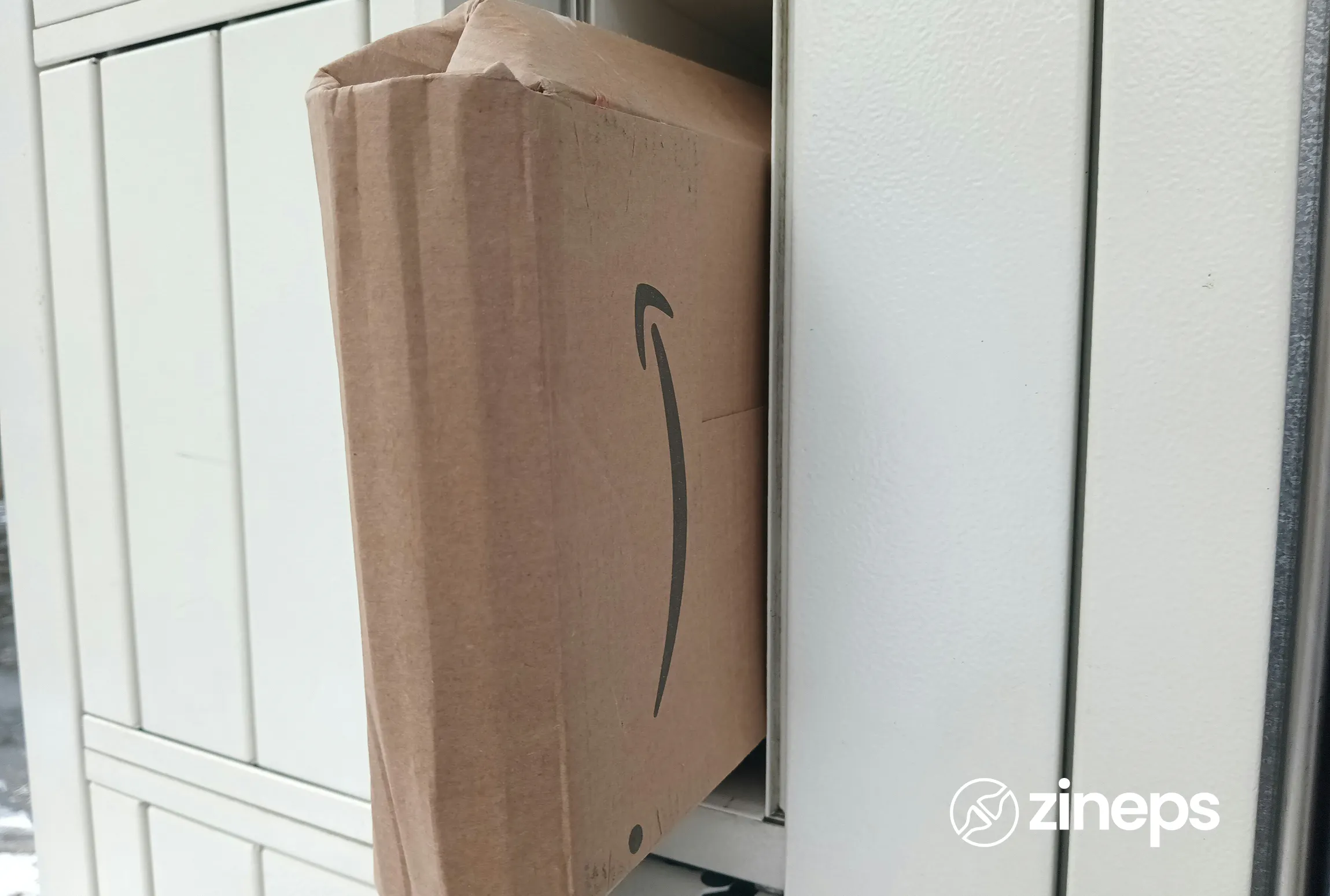
Out-of-Home Delivery in Europe: Why Parcel Lockers and Pickup Points Are Now a Core Logistics Channel
For most of e-commerce history, the delivery experience ended at the front door. A driver rings the bell, hands over a parcel, and the transaction is done. That model worked well enough when online shopping volumes were modest and consumer expectations were low.
Neither of those conditions applies anymore.
In 2024, out-of-home (OOH) parcel volumes across Europe grew by more than 20%. Home delivery grew by 5% over the same period. That four-to-one growth ratio is not a blip. It reflects a structural shift in how European consumers want to receive their purchases, and it has direct implications for how logistics operations need to be designed in 2026 and beyond.
This guide explains what is driving the shift, what it costs businesses that ignore it, and what a scalable OOH delivery strategy looks like in practice.
What Out-of-Home Delivery Actually Covers
The term OOH delivery covers any delivery that goes to a location other than the consumer's home address. In practice, this means three distinct formats:
Parcel Lockers
Automated, self-service terminals placed in high-traffic locations such as supermarkets, petrol stations, and train stations. Consumers collect their parcel at any time by entering a PIN or scanning a QR code. Europe had over 184,400 active automated parcel machines by the end of 2025, with the highest density in Poland, Germany, Belgium, and the Nordics.
Service Points and Parcel Shops
Retail partner locations, typically convenience stores, newsagents, or pharmacy chains, where carriers leave parcels for consumer collection during opening hours. This is the most established OOH format and accounts for the majority of the 462,000 PUDO (pickup and drop-off) locations currently active across Europe.
Click-and-Collect
Where consumers order online and collect from the retailer's own physical store. This format is more relevant for omnichannel businesses and is typically managed separately from carrier-based OOH networks.
The category creating the most operational complexity for shippers is carrier-managed PUDO and locker networks, because each major carrier operates its own independent network with its own integration requirements.
The Consumer Case Is Overwhelming
A common assumption is that home delivery remains the strong default preference and OOH is a niche option for a minority of shoppers. The data has moved well past that framing.
Research from Sendcloud's E-commerce Delivery Compass shows that almost a third of European consumers (28.5%) say they would consider shopping with a competitor if their preferred online store did not offer OOH delivery. In the Nordics, the preference is even sharper: 77% of consumers say the ability to choose a pickup location is the most important factor when deciding where to buy online, according to nShift's 2026 delivery trends research.
The specific things consumers want from their delivery experience are telling:
- 82.5% want to decide what happens if a first delivery attempt fails
- 67.5% want to choose a preferred delivery day and time window
- 58.1% want to redirect a parcel that is already in transit
- 44% of European e-shoppers already choose OOH when the option is presented at checkout
Among serial shoppers, defined as consumers who buy online at least twice per week, the preference for OOH is even more pronounced. 46.2% prefer parcel locker collection and 44% prefer service point delivery over having a parcel brought to their door. These are the highest-value customers in any e-commerce business, and they have a strong preference that many stores are still not serving well.
The Financial and Operational Case
Consumer preferences are persuasive. But the operational and financial arguments for OOH delivery are equally compelling, and in many cases more actionable for logistics teams.
Delivery cost reduction: Automated locker systems reduce last-mile delivery costs by 50 to 55% compared to traditional home delivery attempts. A courier delivering to a locker network can process up to 150 packages per hour. The equivalent figure for home deliveries is 15 to 30 packages per hour. For high-volume shippers, this difference in throughput compounds into meaningful cost savings at scale.
Failed delivery rates: Failed first delivery attempts in dense urban areas can reach 25%. When a parcel locker or service point is the destination, the delivery either completes or it does not, but there is no missed attempt, no redelivery cost, and no consumer waiting at home. European parcel locker networks cut failed delivery rates by 40% compared to home delivery.
Cart abandonment at checkout: More than 8 in 10 consumers abandon carts when their preferred delivery option is not available, according to nShift research. Offering OOH alternatives at checkout is one of the most direct lever pulls available to conversion rate optimisation teams.
Sustainability reporting: Parcel lockers and pickup point networks reduce CO2 emissions by 13 to 32% per parcel on average compared to individual home delivery routes, and up to two-thirds in dense urban environments where consolidated delivery routes replace separate van journeys. As the EU's Carbon Border Adjustment Mechanism and corporate sustainability reporting requirements tighten, logistics emissions are increasingly a board-level consideration rather than a CSR footnote.
The Infrastructure Is Ready. The Integration Is the Hard Part.
The European OOH network has reached a scale where it qualifies as a genuine logistics channel. Geopost, which operates the DPD brand, had over 140,000 OOH points across Europe by the end of 2025. GLS doubled its European OOH network in 24 months, growing from 70,000 to 130,000 locations. DHL has made Packstation lockers the default residential delivery option in Germany for parcels that meet size criteria. PostNL, bpost, and Colissimo have all made substantial locker investments in their respective markets.
Combined, Europe now has over 646,000 active OOH points. Coverage in major markets is comprehensive. For most European consumers, a parcel locker or service point is closer than they might assume.
The challenge for shippers is not infrastructure availability. It is integration and orchestration.
Each carrier OOH network operates independently. Each one has its own API for accessing location data, its own label format, its own set of tracking events, and its own rules for parcel size and weight. A business that wants to offer DPD service points, DHL Packstation lockers, PostNL parcel shops, and bpost servicepoints to consumers at checkout is looking at four separate technical integrations, four separate location data feeds to maintain, and four separate sets of operational procedures for customer service and returns.
Scale that across the six to eight European markets a growing e-commerce business typically serves, and the integration overhead becomes a genuine barrier. This is the point where many businesses stall on OOH delivery. Not because the logic is unclear, but because the cost and complexity of doing it properly exceeds what the team can absorb alongside everything else.
Why Logistics Orchestration Changes the Equation
The traditional answer to multi-carrier complexity has been to add more integrations over time, managing each carrier relationship separately. This works at low volume, but it breaks down as carrier count grows and as OOH requirements are added to already-complex shipping configurations.
A logistics orchestration approach treats the carrier network as infrastructure that sits beneath a single operational layer, not as a collection of parallel integrations that each need independent management.
At Zineps, we built the platform around this principle. The Logistics OS connects once to each carrier's systems, normalises their data into a consistent format, and exposes a single interface for shippers to manage all carriers, including all OOH networks, through one workflow.
Single Integration, All Networks
A single API call returns normalised location data for all connected carrier OOH networks, formatted consistently so that checkout teams can display the nearest service points and lockers without building or maintaining separate location databases.
Intelligent Carrier Routing
Carrier routing rules can include OOH preferences as a variable alongside cost, delivery time, and carrier performance data, so the right carrier and OOH network is selected automatically for each shipment rather than requiring manual configuration per order.
Unified Tracking Across Networks
Tracking events from OOH deliveries, which have a different structure from home delivery events, are normalised into a consistent format so that post-purchase communication flows and customer service tooling work the same way regardless of carrier.
Unified Returns
Returns from OOH locations are handled through the same unified workflow as other returns, rather than requiring a separate process per carrier. This is the practical difference between managing multiple carrier integrations and operating from a Logistics OS level.
Where the Market Is Heading
The investment decisions being made by major carriers in 2025 and 2026 are a reliable leading indicator of where parcel volume is going. Geopost grew its locker network by 63% in a single year. GLS committed to 130,000 OOH points as a network milestone. DHL and Deutsche Post are rolling out Packstation infrastructure specifically to handle expected volume growth in residential and urban delivery markets.
Carriers invest in infrastructure when they are confident the volumes will fill it. They have better forward demand data than any external analyst. The European OOH parcel market is projected to grow at 15% compound annual growth rate from its current approximate value of 7 billion euros to over 14 billion euros by 2030.
For shippers, the implication is straightforward. The businesses building OOH delivery capability into their logistics operations today, rather than treating it as a future project, will have a structural advantage in conversion, cost efficiency, and consumer satisfaction over businesses that continue to treat home delivery as the only option.
For more information on how DHL measures the sustainability impact of OOH delivery networks across Europe, their 2025 Out-of-Home Trends report offers detailed analysis: DHL eCommerce OOH Trends 2025
A Practical Path to OOH Delivery
For businesses ready to move from understanding OOH delivery to implementing it, the steps are sequential:
Step 1: Audit existing carrier relationships. Which carriers you already work with have OOH networks in your key markets? Extending an existing carrier relationship to include OOH capability is faster and lower cost than onboarding a new carrier.
Step 2: Map OOH density against your consumer base. Coverage varies significantly by postal code. Knowing where your consumers are concentrated, and where the nearest OOH points are, lets you prioritise which markets to activate first.
Step 3: Solve checkout integration. Consumers choose OOH at checkout, which means your e-commerce platform needs to call carrier location APIs and display service point or locker options during the delivery step. This is typically the most technically complex piece for businesses without an existing multi-carrier integration layer.
Step 4: Configure operational workflows. OOH shipments have different label formats, different packaging constraints, and different customer communication requirements. These need to be set up correctly before going live.
Step 5: Measure and expand. Track OOH adoption rate by market, delivery success rate compared to home delivery baseline, and cost per successfully delivered parcel. The data almost always strengthens the case for expanding OOH coverage to additional markets and carrier networks.
OOH Delivery as a Strategic Asset
The businesses gaining the most from OOH delivery in 2026 are not treating it as a secondary checkout option. They are treating it as a strategic logistics asset that improves margin, reduces operational friction, and serves their highest-value customers better.
The infrastructure exists across Europe. The consumer preference is established and growing. The financial case is proven. What separates the businesses benefiting from this shift from those still watching it from a distance is operational readiness: the ability to connect to multiple OOH networks, manage them as a unified channel, and surface them cleanly to consumers at the moment of purchase.
Zineps connects your store to every major OOH carrier network in Europe through a single integration. See how the Logistics OS removes the complexity of multi-carrier OOH delivery. Request a demo today.