
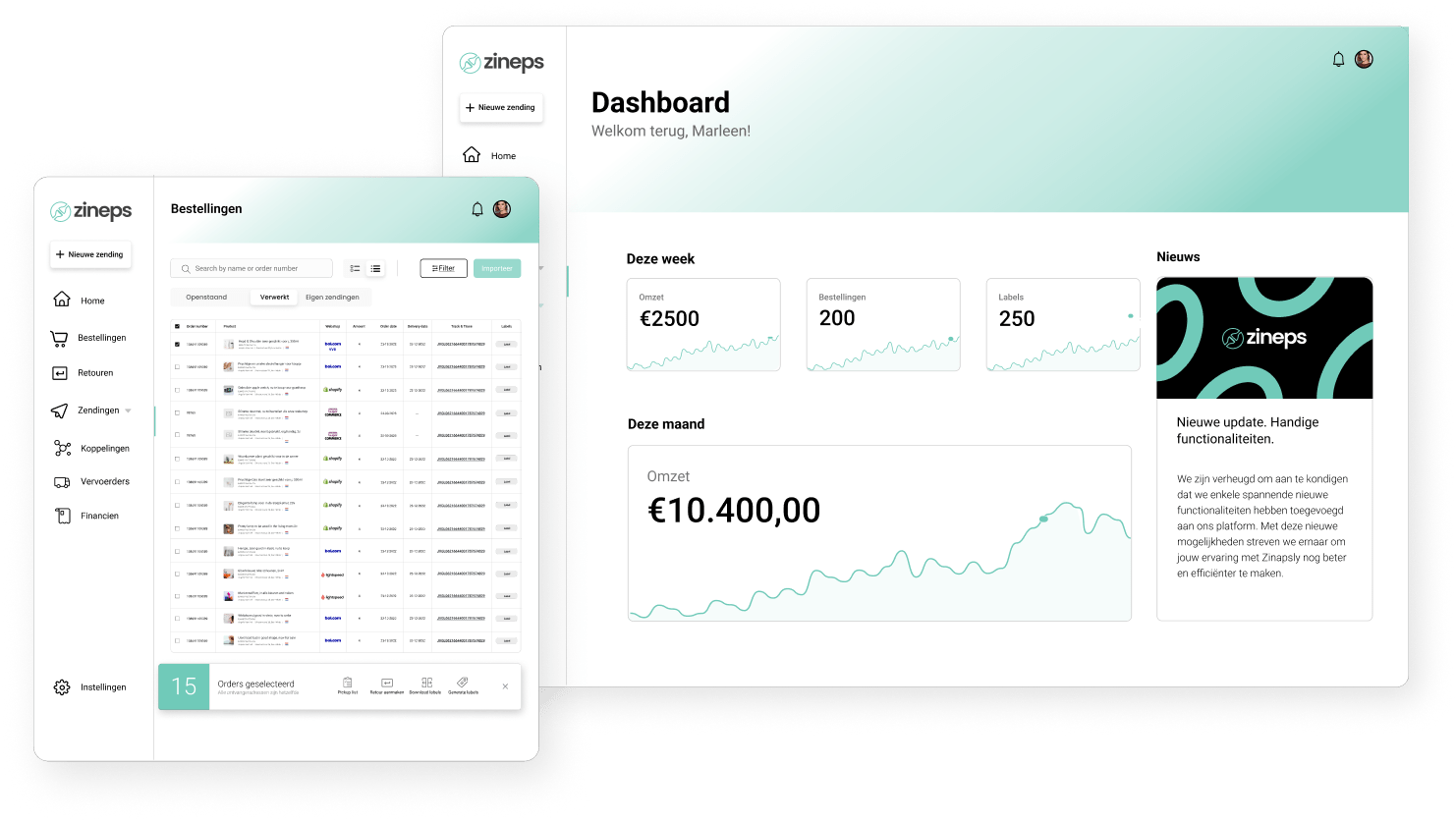
Multi-Carrier Shipping Automation: Step-by-Step Guide for Ecommerce
Multi-Carrier Shipping Automation: How to Implement It Step-by-Step
As ecommerce businesses grow, shipping operations quickly become one of the most complex parts of the business.
What initially starts as a simple workflow — exporting orders and creating shipping labels manually — can quickly turn into a major operational bottleneck as order volumes increase.
Operations teams often spend hours every day selecting carriers, generating labels, checking addresses, sending tracking updates and managing returns.
This is where multi-carrier shipping automation becomes essential.
Instead of managing shipments manually, businesses can automate their entire shipping workflow using a shipping automation platform that connects ecommerce stores, carriers and logistics systems in one place.
In this guide you'll learn how to implement multi-carrier shipping automation step-by-step, including the systems and rules that allow ecommerce businesses to scale shipping operations efficiently.
Why Shipping Automation Matters
Shipping automation has become a core component of modern ecommerce logistics.
Without automation, shipping operations often suffer from:
- manual errors
- inefficient carrier selection
- inconsistent shipping costs
- operational bottlenecks
- limited scalability
As order volumes increase, manual shipping processes quickly become unsustainable.
A multi carrier shipping solution allows businesses to automate repetitive tasks such as carrier selection, label creation and tracking updates.
This allows operations teams to process significantly more shipments while maintaining operational efficiency.
Many ecommerce companies today rely on multi carrier shipping software to connect their ecommerce platforms, warehouses and carriers into one centralized infrastructure.
Businesses often compare several solutions before choosing the right platform, especially when evaluating Sendcloud alternatives.
Step 1 — Connect Your Ecommerce Platforms
The first step in implementing ecommerce shipping automation is connecting your sales channels.
Most modern shipping automation platforms integrate directly with popular ecommerce systems such as:
- Shopify
- WooCommerce
- Magento
- Amazon
- Bol
- Temu
Once the integration is connected, orders are automatically imported into the shipping dashboard.
This eliminates the need for manual order exports and ensures all shipments can be managed from a single interface.
Centralizing order management is the foundation of any scalable shipping automation software.
Step 2 — Connect Your Shipping Carriers
The second step is connecting your shipping carriers.
Most ecommerce businesses work with multiple carriers to optimize delivery speed, reliability and shipping costs.
Common carrier integrations include:
Using a multi-carrier shipping platform allows businesses to dynamically select the most efficient carrier for each order.
Some shipping automation platforms allow companies to use both:
- their own negotiated carrier contracts
- shipping rates available through partner networks
This flexibility allows companies to optimize delivery costs across different regions and shipment types.
Step 3 — Create Shipping Automation Rules
The most powerful feature of multi-carrier shipping automation software is the rule engine.
Shipping rules allow businesses to automatically select carriers based on predefined conditions.
These rules can be based on several variables.
Destination
Example:
If destination = Netherlands → PostNL
Order Value
Example:
Order value > €100 → Express shipping
Package Weight
Example:
Weight > 10kg → DHL
Delivery Speed
Example:
Next-day delivery → UPS Express
By defining automation rules once, businesses eliminate the need to manually select carriers for every shipment.
This significantly improves operational efficiency and reduces shipping errors.
Step 4 — Automate Shipping Label Generation
Once the system selects the appropriate carrier, the next step is automatic label generation.
Shipping automation platforms automatically generate:
- shipping labels
- tracking numbers
- customs documentation for international shipments
Warehouse teams can print shipping labels instantly without logging into multiple carrier systems.
This reduces operational friction and speeds up order fulfillment.
Step 5 — Automate Tracking and Customer Notifications
Customer communication plays an important role in the shipping experience.
Modern shipping automation platforms automatically send customers:
- shipping confirmation emails
- tracking links
- delivery status updates
Some platforms also provide branded tracking pages, allowing businesses to maintain a consistent brand experience after checkout.
Improved tracking communication also reduces the number of customer support inquiries related to delivery status.
Step 6 — Automate Returns Management
Returns are one of the most time-consuming aspects of ecommerce logistics.
A modern shipping automation solution should include a return management system that allows customers to initiate returns easily.
Typical return automation features include:
- automatic return label generation
- return tracking
- automated return approval rules
- branded return portals
Automating returns helps businesses simplify reverse logistics and reduce manual operational work.
Step 7 — Monitor Shipping Performance
Once shipping automation is implemented, monitoring logistics performance becomes essential.
Most shipping automation platforms provide analytics such as:
- average shipping cost
- carrier performance
- delivery times
- shipping error rates
These insights allow ecommerce companies to continuously optimize their shipping strategy and improve delivery performance.
Key Metrics to Track
To evaluate the impact of shipping automation, ecommerce businesses should monitor several key performance indicators.
Order Processing Time
How long it takes to generate shipping labels and prepare shipments.
Shipping Cost Per Order
Average shipping cost across all carriers.
Delivery Success Rate
Percentage of successful deliveries without delays or failed attempts.
Operational Efficiency
Number of shipments processed per employee or warehouse team.
Tracking these metrics helps companies identify optimization opportunities and improve logistics efficiency.
How Zineps Supports Shipping Automation
Zineps provides a multi-carrier shipping automation platform designed for ecommerce and logistics companies.
The platform allows businesses to:
- connect multiple carriers
- automate carrier selection
- generate shipping labels automatically
- manage tracking updates and returns
- scale shipping operations globally
By centralizing shipping infrastructure into one system, businesses can significantly reduce manual work and improve operational efficiency.
Explore the platform:
View pricing:
https://www.zineps.com/pricing
FAQ
What is a multi-carrier shipping platform
A multi-carrier shipping platform is software that allows businesses to manage shipments across multiple carriers from a single dashboard. It automates carrier selection, shipping label creation, tracking updates and other logistics workflows.
How long does it take to implement shipping automation
Most ecommerce businesses can implement shipping automation within a few hours to a few days depending on integrations and carrier configuration.
Do I need contracts with shipping carriers
Many shipping automation platforms allow businesses to use their own carrier contracts or access discounted rates through partner networks.
Can small ecommerce businesses use shipping automation
Yes. Even small ecommerce stores benefit from shipping automation because it removes repetitive operational tasks and improves shipping efficiency.
What is the biggest benefit of multi-carrier shipping automation
The biggest benefit is scalability. Businesses can process significantly more shipments without increasing manual workload.
Ready to Automate Your Shipping Operations?
Multi-carrier shipping automation helps ecommerce businesses reduce manual work, improve delivery efficiency and scale shipping operations.
Discover how Zineps helps companies manage multiple carriers, automate shipping workflows and simplify logistics from one platform.