
Fulfillment Services Explained: How to Build a Logistics Stack That Scales
Every order a customer places is a test. Not just of your product, but of your entire logistics operation: the speed at which you pick and pack, the carriers you have available, and the systems that coordinate it all. For most growing ecommerce brands, fulfillment is the point where growth either accelerates or stalls.
The global ecommerce fulfillment market is valued at $140 billion in 2026. Brands that outsource fulfillment grow revenue nearly six times faster than those running warehouses entirely in-house. But outsourcing alone is not a strategy. The difference between businesses that scale confidently and those that constantly firefight logistics problems comes down to infrastructure.
This guide breaks down every fulfillment model available to ecommerce operators, the criteria that matter most when choosing a partner, and why the most forward-thinking operators are moving toward a connected logistics stack.
What Fulfillment Services Actually Cover
Fulfillment services encompass every step between a customer placing an order and receiving their package. That includes receiving your inventory, storing it, picking and packing individual orders, handing them off to carriers, and processing the returns that come back.
Getting this right has become a direct competitive advantage. Consumers in 2026 expect two-day delivery as a baseline, with same-day becoming the new standard in major European markets. Meeting those expectations at scale requires either serious internal capital investment or the right external partnerships.
The Four Fulfillment Models
Self-Fulfillment
Self-fulfillment means your team handles every step in-house, whether from a spare room, a rented unit, or a fully owned warehouse. For early-stage businesses shipping products that require special handling or personal curation, this model makes sense. It gives you complete control over packaging quality, brand presentation, and the small details that differentiate a boutique operation.
The trade-off is capacity. Self-fulfillment does not scale without proportional investment. Every spike in order volume creates pressure, and the cost structure remains largely fixed whether you ship 50 or 5,000 orders in a given week.
Third-Party Logistics (3PL)
A 3PL provider takes on warehousing, order processing, and carrier coordination on your behalf. You send inventory to their facility, and they handle execution. This model delivers genuine cost advantages at scale because 3PLs negotiate bulk carrier rates across thousands of merchants, and those savings pass down to clients.
Research shows that 3PLs can reduce shipping costs by 20 to 40 percent compared to brands negotiating rates independently. Top-tier providers maintain accuracy rates above 99.5 percent, which has a measurable impact on customer satisfaction and return rates. In Europe specifically, a fulfillment center in the Netherlands or Belgium gives you reach across Western Europe with next-day or two-day ground delivery to Germany, France, the UK, and the Benelux, without needing to rely on expensive air freight for near-European shipments.
Dropshipping
In a dropshipping model, you hold no inventory. When a customer orders, the purchase is forwarded directly to a supplier or manufacturer who ships on your behalf. Capital efficiency is significant: you can test new products and enter new markets without warehouse commitments. The trade-off is control. Consumers in 2026 expect tracking, branded packaging, and fast delivery times that dropshipping models often cannot deliver reliably, especially when suppliers are overseas.
Hybrid Fulfillment
Hybrid fulfillment is the model most serious operators land on as they grow. Some product categories stay in-house while others go to one or more 3PLs. High-value items requiring careful quality checks are handled internally. High-volume, standardized SKUs go to a 3PL for cost efficiency and speed.
This model maximizes flexibility. It also introduces coordination complexity. Managing multiple fulfillment partners, carriers, and inventory pools across different systems becomes a significant operational burden without the right infrastructure connecting it all.
What the Numbers Say About Outsourcing
Currently, 57 percent of ecommerce companies outsource some or all of their fulfillment processes, and that figure continues to grow. Brands that outsource fulfillment grow six times faster in revenue than those managing warehouses in-house. Outsourced fulfillment operations are also growing 12 percent faster year over year compared to in-house equivalents.
But the decision is not purely about volume thresholds. It is about where your team's attention is best spent. The modern opportunity is in building the customer experience, developing products, and expanding into new markets. Logistics infrastructure should support that ambition, not absorb it.
Five Selection Criteria That Actually Matter
Geographic Coverage and Carrier Relationships
Where your fulfillment partner has warehouses determines what delivery promises you can make to customers. In Europe, your 3PL's relationships with regional carriers including DPD, GLS, PostNL, Bpost, and DHL directly determine your per-shipment cost and delivery performance. A 3PL with strong relationships in one country but limited reach in another becomes a constraint the moment you decide to expand.
Technology and Integration Depth
The best 3PLs run cloud-based warehouse management systems with real-time inventory visibility, automated order routing, and native integrations to the ecommerce platforms and ERPs their clients use. If your fulfillment partner cannot push live order status data into your stack, you are operating blind. In 2026, deep technology integration is not a differentiating feature. It is a prerequisite.
Transparency and Reporting
You should be able to see your inventory levels, order status, carrier performance, and cost per shipment without emailing your account manager. Real-time dashboards and proactive alerts for stockouts or shipment exceptions are now standard at serious providers. If you are still getting weekly spreadsheets, that is a signal worth paying attention to.
Multi-Carrier Flexibility
Most 3PLs work with a limited set of carriers and apply a static assignment logic to outbound shipments. If your business ships internationally or to regions with inconsistent coverage from major carriers, you need a partner that can route through multiple carriers dynamically based on destination, delivery window, weight, and cost. Static carrier assignments leave money on the table and create avoidable delivery failures.
Scalability Through Growth Stages
A fulfillment partner that performs well at 500 orders per month may not have the systems or physical capacity to handle 50,000. Ask specific questions: What is their peak throughput? What SLAs apply during peak periods? How do they handle returns at volume? The answers reveal whether this is a partner for your next stage or just your current one.
The Coordination Problem Nobody Talks About
As ecommerce businesses grow and expand into new markets, they typically accumulate multiple fulfillment partners, multiple carriers, and multiple platform integrations. Each system operates in its own silo.
A return processed through one 3PL does not automatically update inventory at another. A carrier delay on a cross-border shipment requires manual intervention to reroute. Reporting across multiple partners requires stitching together data from four different dashboards, often in incompatible formats.
This is the fulfillment management problem that does not get written about until it becomes urgent. By the time it does, it is already costing you in delayed orders, customer service overhead, and the operational time of your best people.
How a Logistics OS Solves the Infrastructure Problem
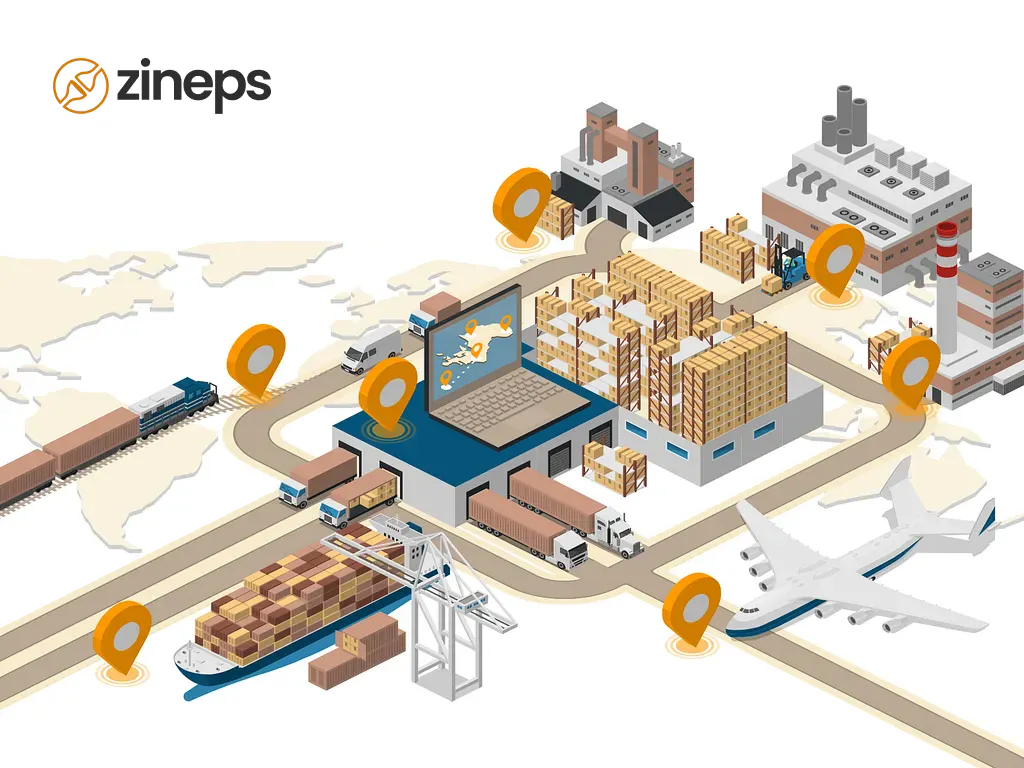
Zineps was built to solve exactly this problem. Rather than being another fulfillment provider, Zineps operates as an Operating System for Shipments: a single infrastructure layer that connects your ecommerce store, your fulfillment partners, your carriers, and your returns flow into one coordinated system.
Instead of managing individual integrations with each 3PL or carrier separately, you get a unified control plane. Carrier selection happens automatically based on destination, weight, cost, and delivery window. Returns are processed consistently regardless of which fulfillment partner originally shipped the order. Every data point flows into one reporting layer where you can act on it.
For merchants on Shopify, WooCommerce, Bol.com, or Amazon, Zineps integrates natively. For businesses running custom stacks, the Zineps API connects directly to your own systems. The result is a logistics operation that behaves like a well-designed product: composable, measurable, and continuously improving.
Merchants using Zineps report saving an average of 40 percent on shipping costs and more than 15 hours per week on manual logistics coordination.
The Fulfillment Decision Is Really an Infrastructure Decision
Choosing a fulfillment service is not a one-time vendor evaluation. It is an infrastructure decision that shapes how your business operates at every order volume, what delivery promises you can make to customers, and how efficiently your capital works.
The most resilient ecommerce operators in Europe treat fulfillment as a capability to be engineered, not a cost center to be minimized. That means selecting 3PL partners with the right geographic and carrier coverage, building real-time visibility into every stage of the shipment lifecycle, and maintaining a connected layer above individual providers that lets you optimize the whole network.
When fulfillment works as a system rather than as a collection of disconnected vendor relationships, two-day delivery across multiple European countries becomes achievable without massive internal investment. That is the practical difference between a logistics vendor and a Logistics OS.
What to Do Next
If you are currently managing fulfillment manually or across disconnected systems, start with visibility. You cannot optimize what you cannot see.
Audit your current shipment costs by carrier, destination, and product category. Identify where delays and exceptions are most frequently occurring. Look honestly at how much of your operations team's time goes to logistics coordination rather than strategic improvements.
Whether you are shipping 500 orders per month or 500,000, the infrastructure decisions you make now will either support or constrain your next phase of growth. See how Zineps connects your fulfillment partners and carriers in one platform.
For more data on fulfillment trends and outsourcing benchmarks, the ShipBob 2026 Fulfillment Trends Report is a useful reference.